
Demanding data models finally have their CRM.
Batch Data is the customer data platform built into the CEP, hosted on 100% European infrastructure. It connects your sources, unifies every customer into a single profile, and activates and distributes data in real time.
Batch Data: the customer data platform Batch is built on.
The most innovative CRM programs run on structured data that is available instantly. That's the job of Batch Data, the customer data platform built into the CEP: Connect plugs Batch into your data sources, Unify structures that data around the customer profile, and Activate puts it to work in real time.


Batch Data Connect

Connect plugs Batch into your entire stack, from sources to destinations. Collect behavioral data from your apps and servers in real time through our SDKs and API, sync your data warehouses and files with Cloud Sync, connect your analytics and attribution tools with native connectors, then distribute the data Batch produces to your systems.

Batch Data Unify

Unify brings your data together into a single profile: a 360° view of every customer. It merges anonymous visitors and logged-in customers through identity resolution, records every behavior while keeping it queryable in real time, and links your business objects to profiles according to your own data model. Each profile is then enriched continuously, from aggregates to predictive scores.


Batch Data Activate

Activate puts the unified customer profile to work in real time. It powers advanced segmentation, personalizes every message, and triggers your marketing and transactional journeys as soon as a behavior or attribute changes.
European hosting
Batch, a French company, runs its platform on more than 600 dedicated bare-metal servers in Europe. Both the vendor and its hosting providers fall under European law: your data stays out of reach of the US CLOUD Act, from collection to delivery.
Built for scale
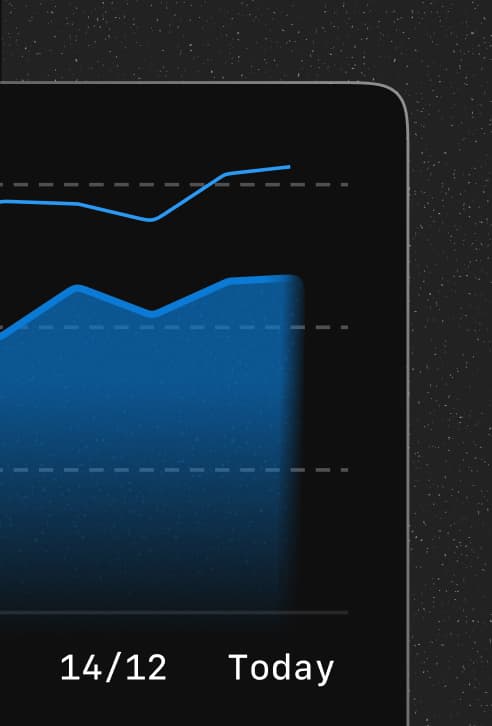
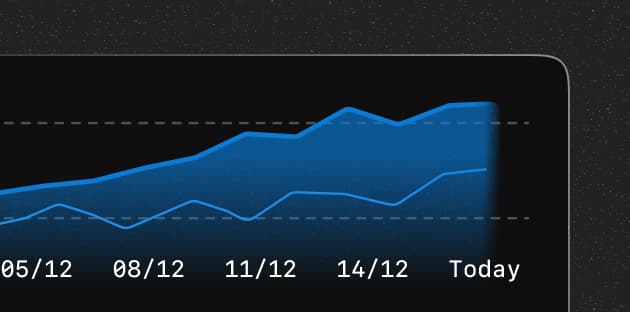
20 billion events processed every day, 1.2 billion monthly active profiles, 99.9% uptime. A distributed architecture built on Kafka, Cassandra, ClickHouse and Kubernetes, processing every event in real time, even at peak load.
European hosting
Batch, a French company, runs its platform on more than 600 dedicated bare-metal servers in Europe. Both the vendor and its hosting providers fall under European law: your data stays out of reach of the US CLOUD Act, from collection to delivery.
Built for scale
20 billion events processed every day, 1.2 billion monthly active profiles, 99.9% uptime. A distributed architecture built on Kafka, Cassandra, ClickHouse and Kubernetes, processing every event in real time, even at peak load.
Batch Data Connect: connect all your sources, distribute every interaction to your systems.

Collect your first-party data in real time from your apps, websites and servers. With Cloud Sync, synchronize your data warehouses and files at the frequency you choose. Then distribute sends, opens, clicks, Profiles and Segments to your systems. Batch Data fits into your existing architecture, adapts to your data model, and keeps your data accessible.
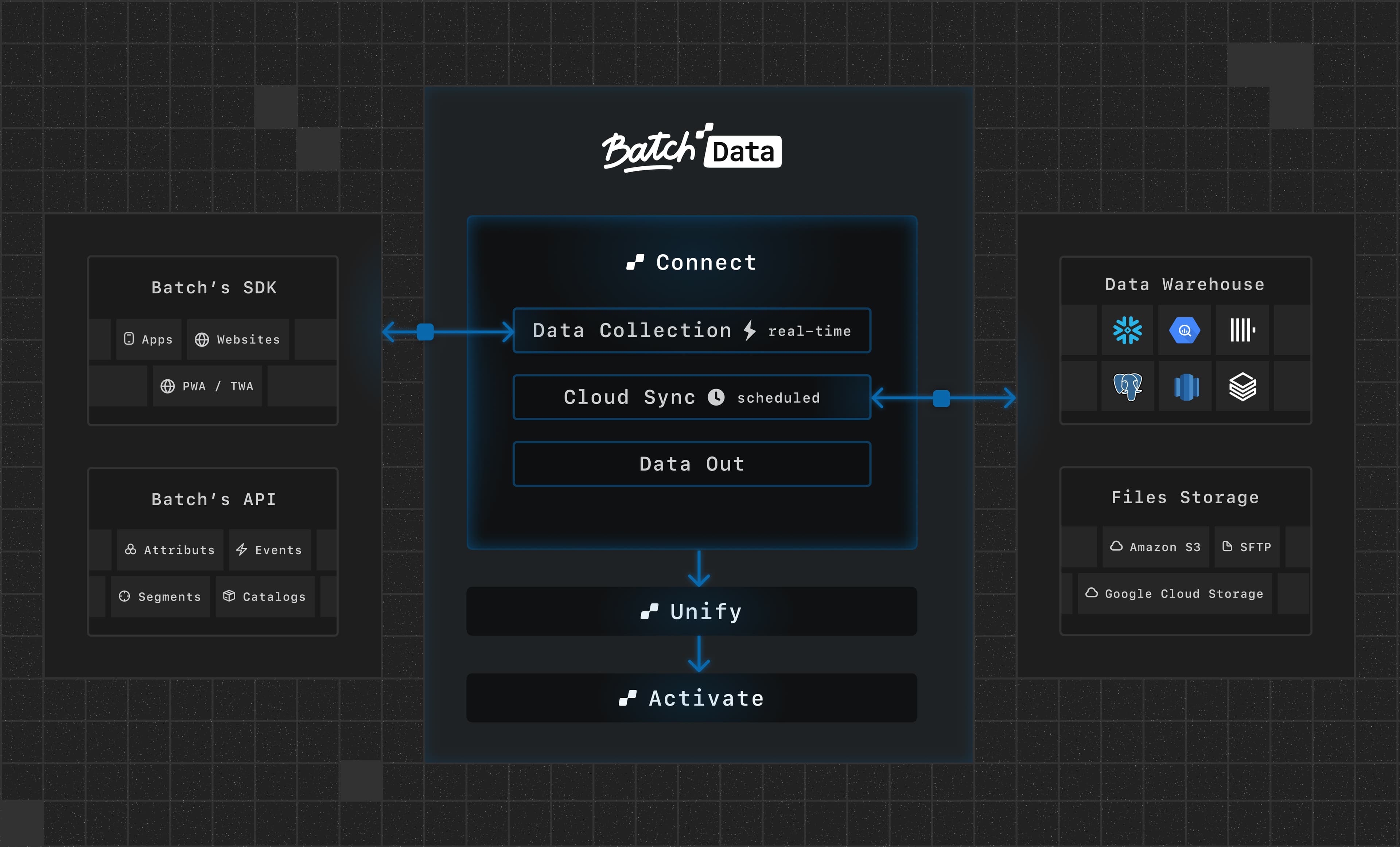
Real-time behavioral tracking.
Batch SDKs collect what your users do in your apps and on your websites: screens viewed, searches, items added to cart. From your servers, you trigger your business events through the API: order shipped, payment confirmed, status changes. Every event enriches the profile and instantly updates your segments, journeys and personalization.
10,000+ apps and websites.
Ranked among the top 80 most-used SDKs on Google Play, Batch SDKs collect screens viewed, searches, carts and device data right after install. Developed for over ten years, they keep pace with every OS change and fit into your release workflows, with detailed changelogs and migration guides for every version.
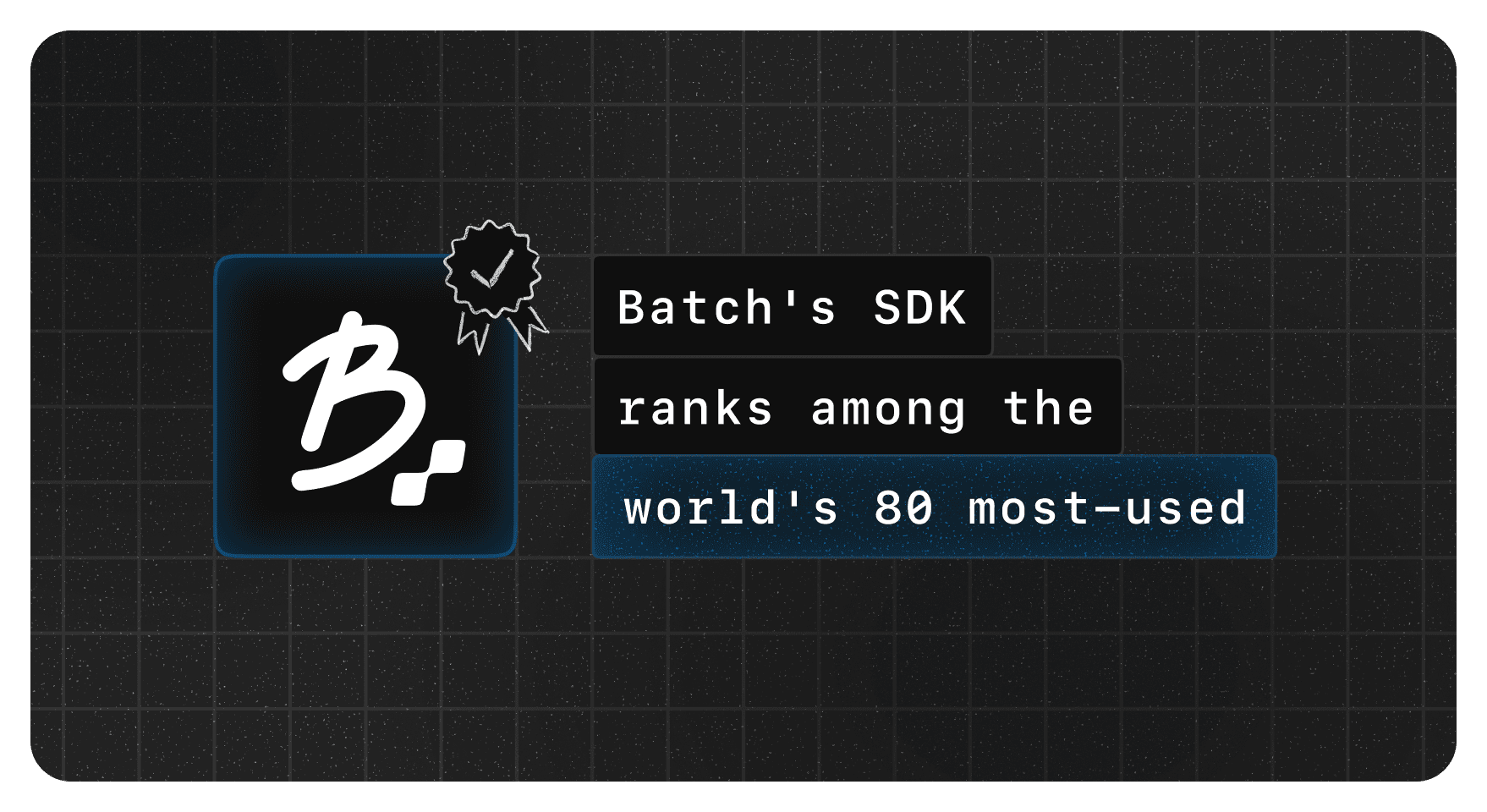
One SDK for every platform.
- iOS: Swift, Objective-C, Swift Package Manager, CocoaPods, XCFramework
- Android: Kotlin, Java, Gradle, Maven Central
- Cross-platform: Flutter, React Native, Expo, Cordova, Ionic
- Web: JavaScript SDK, Web Push, JavaScript snippet, Service worker, Websites, Progressive Web Apps
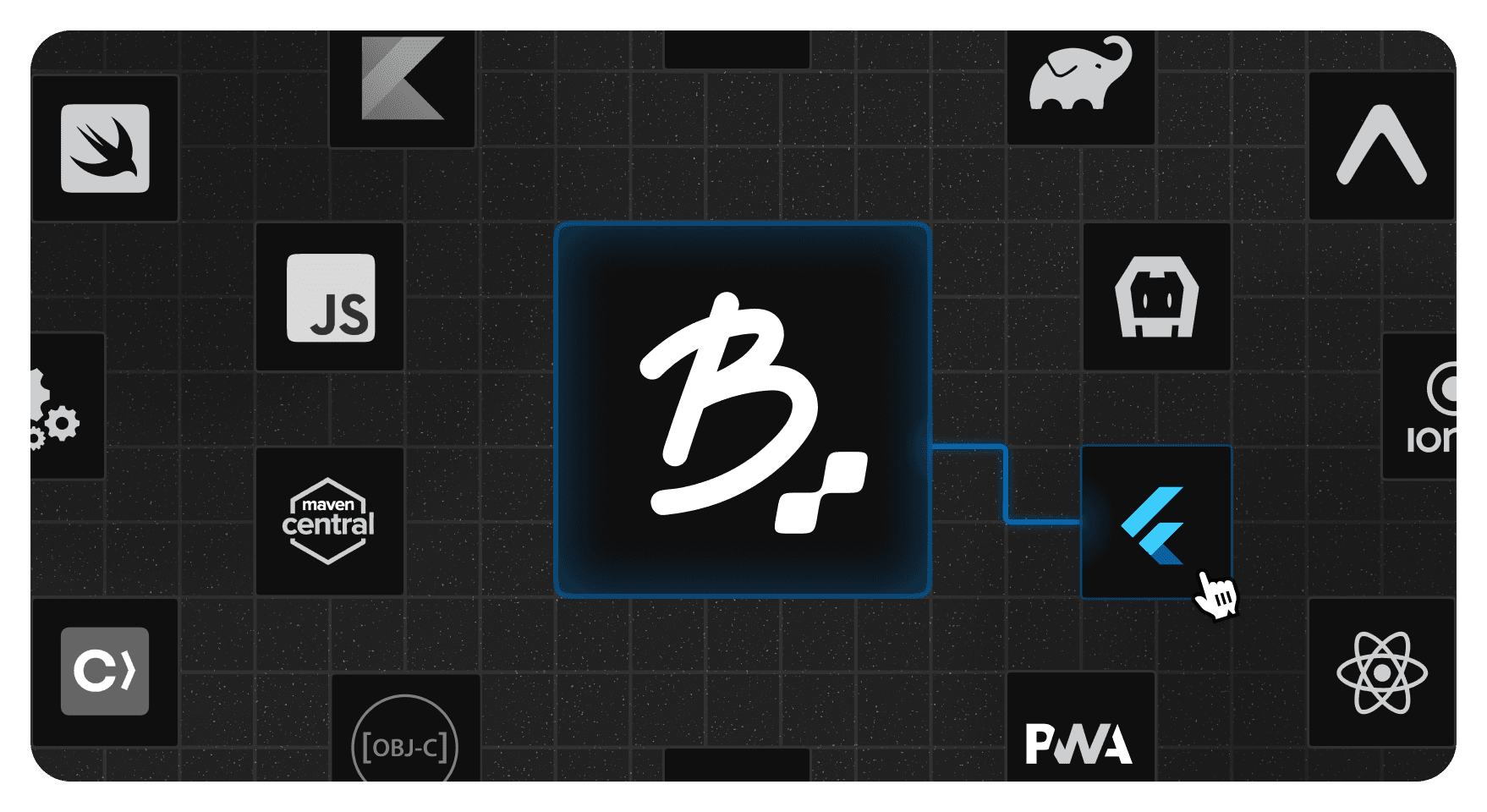
Profile API for server-side tracking.
Order shipped, payment confirmed, loyalty status changed: the Profile API centralizes every update to your customer profiles (attributes, subscriptions and events) through an asynchronous REST API. Profiles are created on the fly and data is instantly available on every channel.
Two endpoints depending on your needs: real-time updates as they happen, or mass updates to sync your database in bulk.
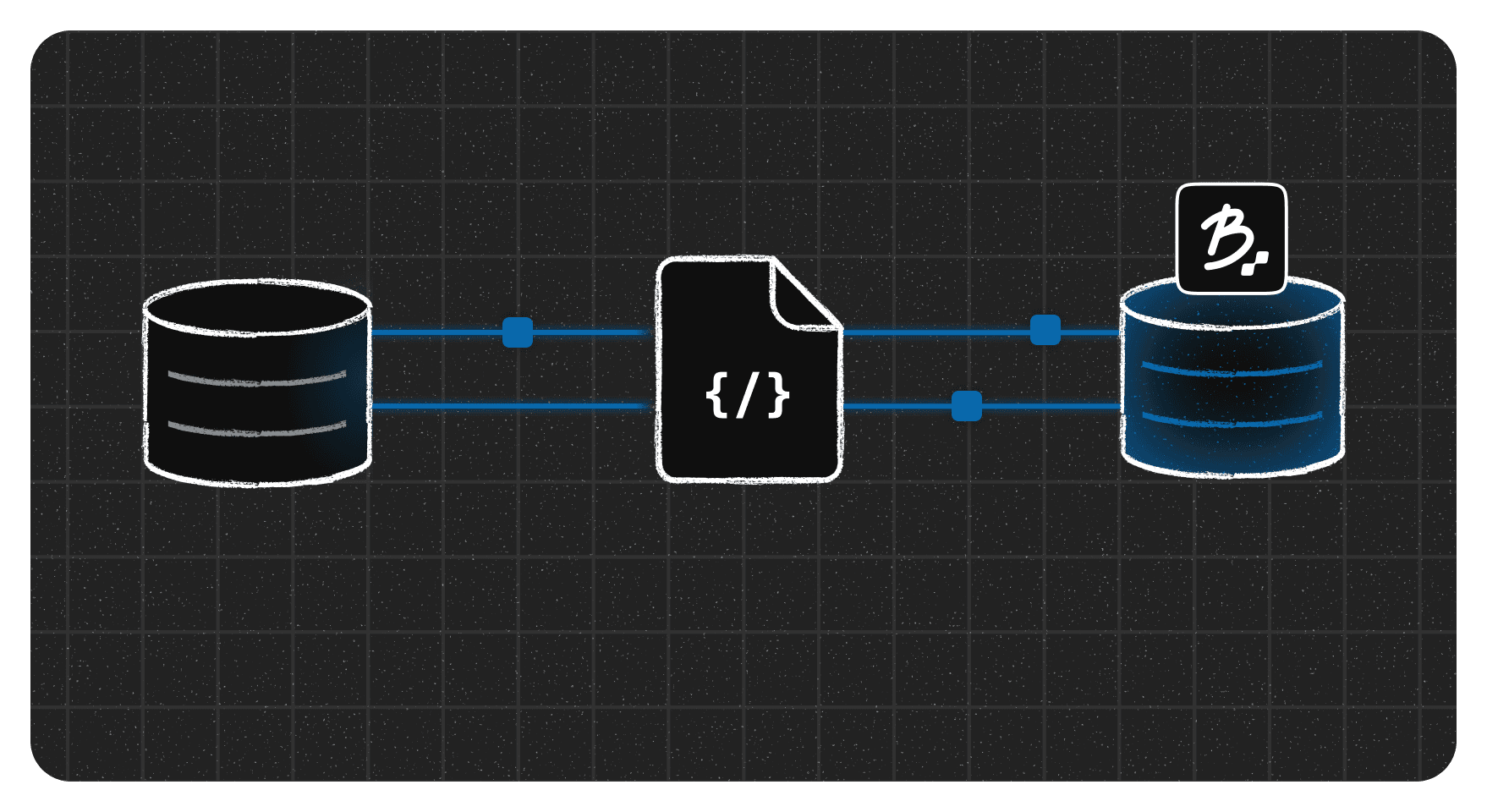
Automated sync with Cloud Sync.
Connect your data warehouses and file storage: Cloud Sync feeds Batch with Profiles, events, Catalogs and Audiences at the frequency you choose, configured from the dashboard. Our connectors also open native connections with other marketing tools.
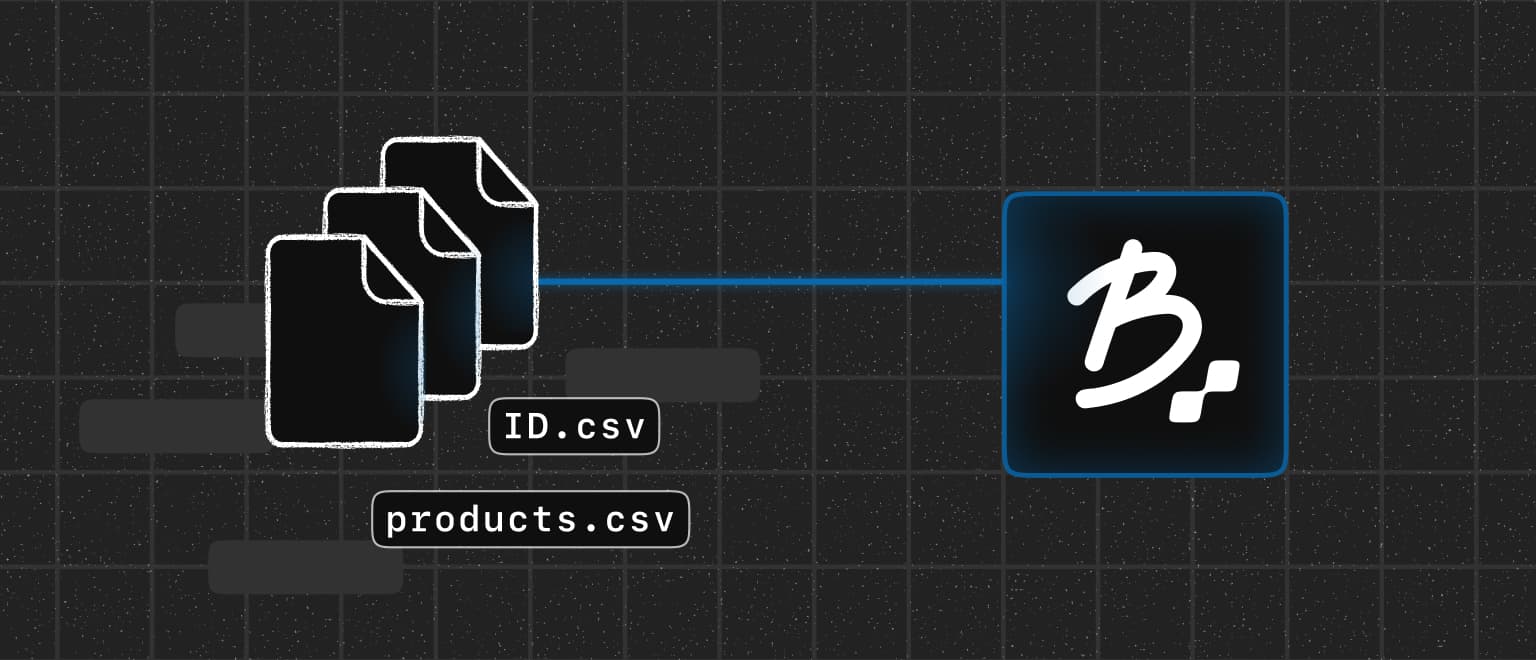
Cloud Sync for Files.
Cloud Sync for Files connects your SFTP servers and cloud object storage. Run each import on the recurring schedule you define: Batch automatically fetches and ingests newly dropped files into your Profiles, Catalogs or Audiences.
It's the most direct path for systems that export files: ERPs, point-of-sale software, loyalty programs, PIMs.
Features: Automated imports · Multi-file · Sync scheduling
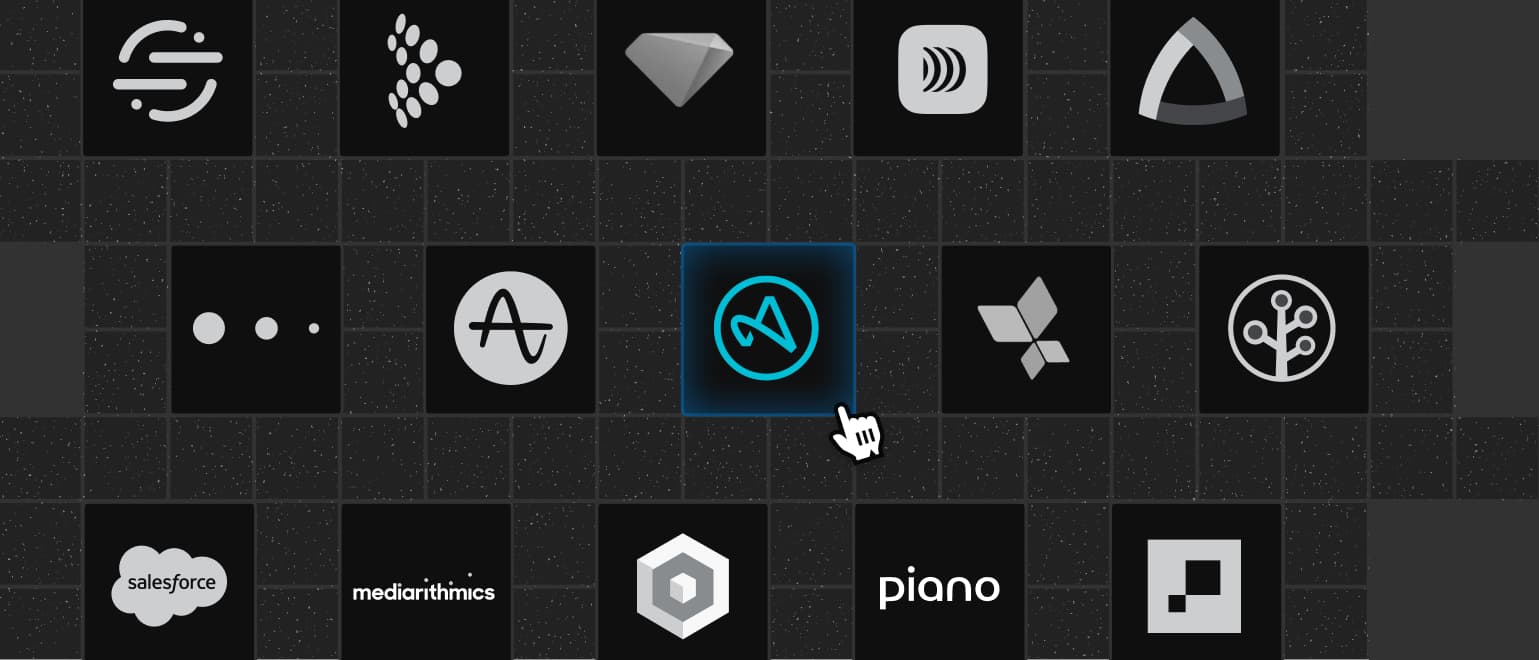
Native connectors for your tools.
Connect Batch to your analytics and attribution tools with ready-to-use integrations: Piano Analytics, Google Analytics, Amplitude, Mixpanel, AppsFlyer, Adjust or Branch. All other integrations are on the partners page.
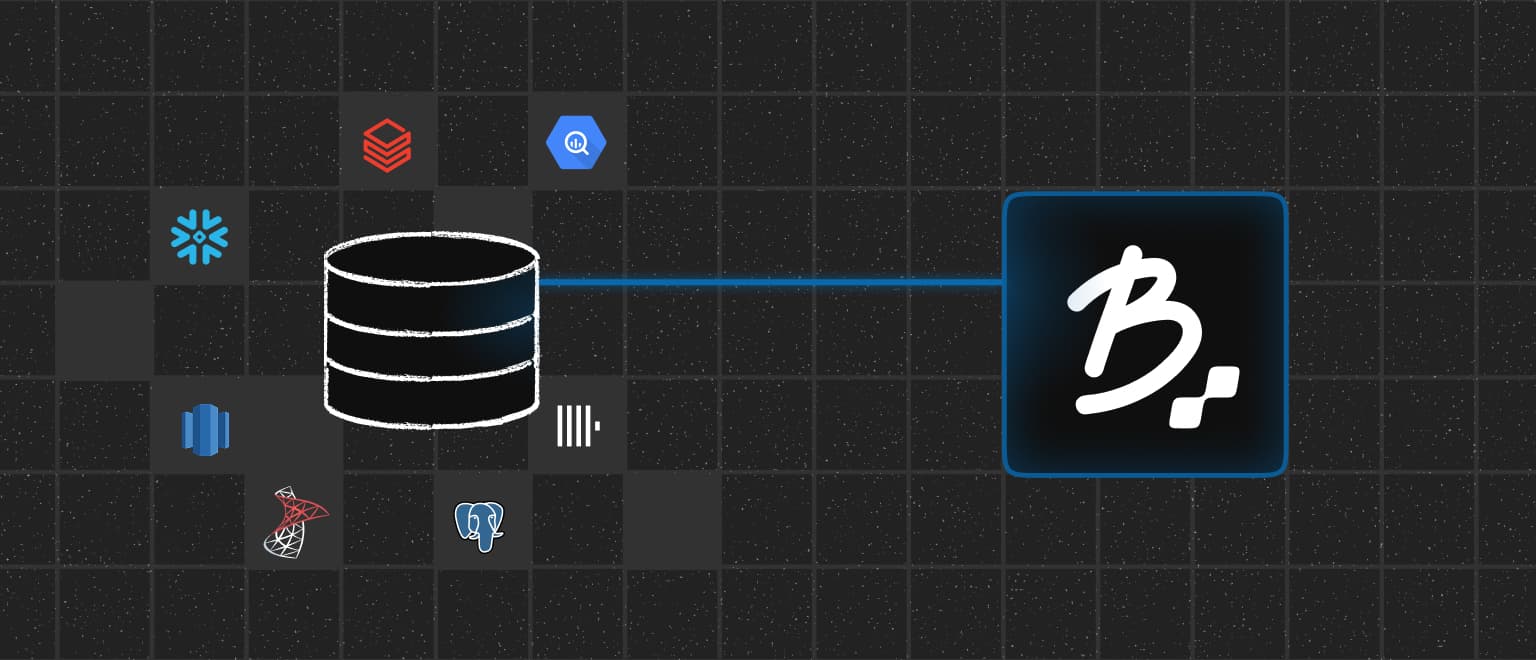
Cloud Sync for Data Warehouses.
Cloud Sync is Batch's native reverse ETL. Pick your tables, map your columns to the attributes and events of your Profiles, Catalogs or Audiences, then schedule the sync: your data warehouse becomes a Batch source, configured from the dashboard.
With change data capture, each run processes only the delta since the previous one. Compute stays low, and so does your data cloud bill.
Your joins, SQL queries and modeling stay in your data warehouse: a Snowflake or BigQuery view becomes a Batch source, synced as is, and your analysts keep their tools.
- Sources: Snowflake · BigQuery · Amazon Redshift · Databricks · ClickHouse · Microsoft SQL Server
- Features: Change data capture · Field mapping · Sync scheduling · Dashboard setup
Cloud Sync for Files.
Cloud Sync for Files connects your SFTP servers and cloud object storage. Run each import on the recurring schedule you define: Batch automatically fetches and ingests newly dropped files into your Profiles, Catalogs or Audiences.
It's the most direct path for systems that export files: ERPs, point-of-sale software, loyalty programs, PIMs.
Features: Automated imports · Multi-file · Sync scheduling
Cloud Sync for Data Warehouses.
Cloud Sync is Batch's native reverse ETL. Pick your tables, map your columns to the attributes and events of your Profiles, Catalogs or Audiences, then schedule the sync: your data warehouse becomes a Batch source, configured from the dashboard.
With change data capture, each run processes only the delta since the previous one. Compute stays low, and so does your data cloud bill.
Your joins, SQL queries and modeling stay in your data warehouse: a Snowflake or BigQuery view becomes a Batch source, synced as is, and your analysts keep their tools.
- Sources: Snowflake · BigQuery · Amazon Redshift · Databricks · ClickHouse · Microsoft SQL Server
- Features: Change data capture · Field mapping · Sync scheduling · Dashboard setup
Native connectors for your tools.
Connect Batch to your analytics and attribution tools with ready-to-use integrations: Piano Analytics, Google Analytics, Amplitude, Mixpanel, AppsFlyer, Adjust or Branch. All other integrations are on the partners page.
Distribute Batch data to your systems.
Export Profiles and Segments, stream your events to your analytics tools, and sync the engagement signals Batch produces back to your data warehouse. Profile, behavioral and engagement data stays available outside Batch, for your analysis and your models.
Every send generates engagement signals.
Sends, deliveries, opens, clicks, views: every interaction with your messages is captured by Batch. It's data only the sender can produce: instantly available for targeting and analysis, and distributed to your systems.

Sent

Delivered

Opened

Direct Open

Clicked

In-App interactions

Bounced

Unsubscribed
Cloud Sync: two-way sync with your systems.
Cloud Sync works both ways. Connections to your data warehouses and file storage also distribute the data produced in Batch to your systems: engagement, Segments, scores.

Cloud Sync for Data Warehouses

Cloud Sync for Files

Two-way sync
Export your data on demand or in real time.
Export Profiles, Segments and events via API or straight to your storage. Events collected by the SDKs are streamed in real time to your analytics tools and other destinations.

Export API

Event Dispatchers

Cloud Sync
A toolbox for developers.
Validate payloads, understand errors instantly and inspect the data actually available in Batch. Diagnostic tools cover the whole ingestion chain, from the first API call to checking a profile in production.

Detailed API errors

Data Catalog

Profile View

Event timeline

Attribute and subscription inspection
Batch Data Unify: unify, structure, govern and enrich your customer and business data.

Build a 360° profile for every customer, attributes and behaviors included, through identity resolution and an anonymous-to-logged-in lifecycle. Structure your business tables in Catalogs, exactly as they exist in your systems. Stay in control of your schema: typed, monitored, governed. Then continuously enrich every profile with predictive scores, aggregates and device data.
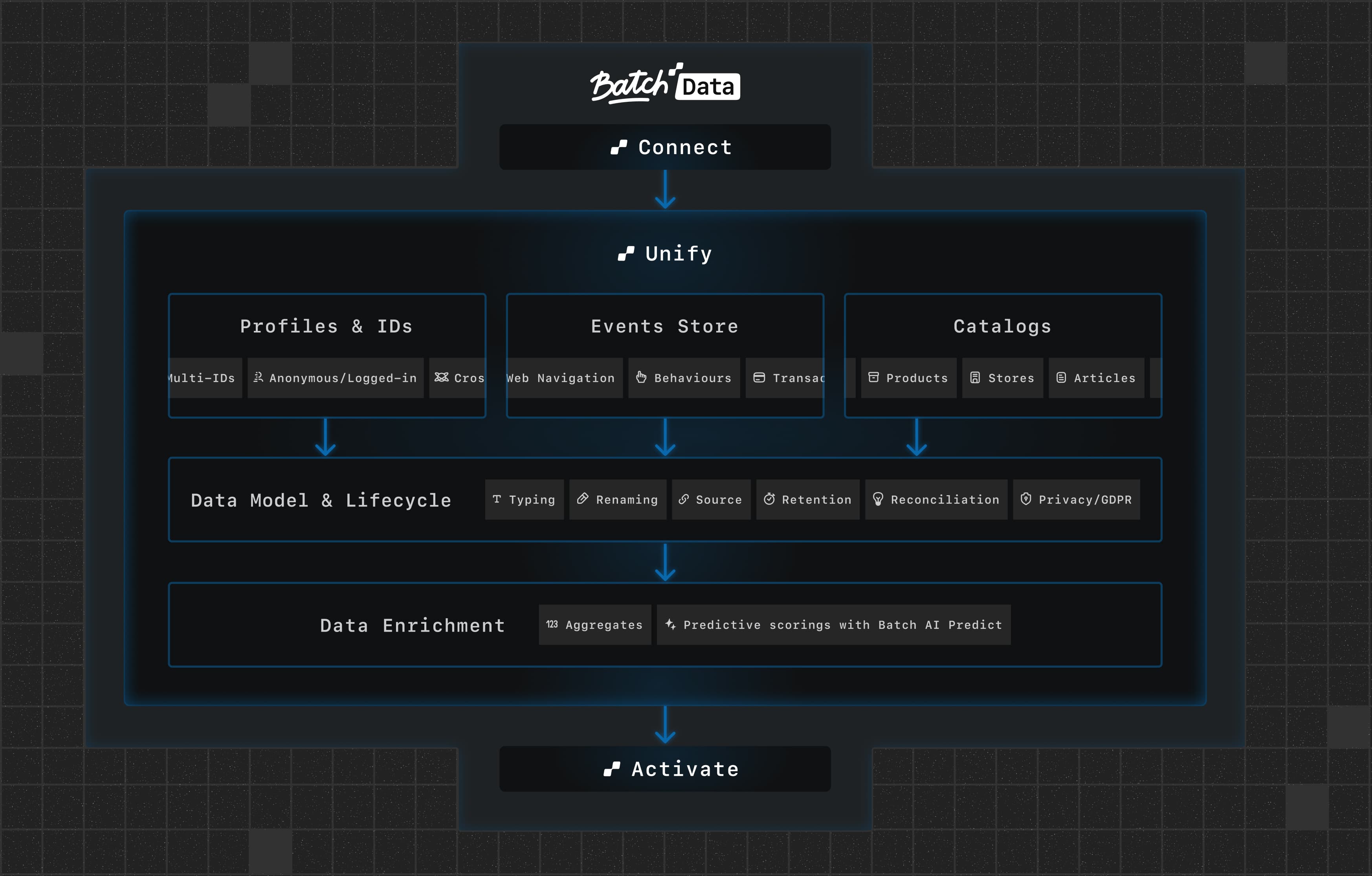
360° profiles and identity resolution.
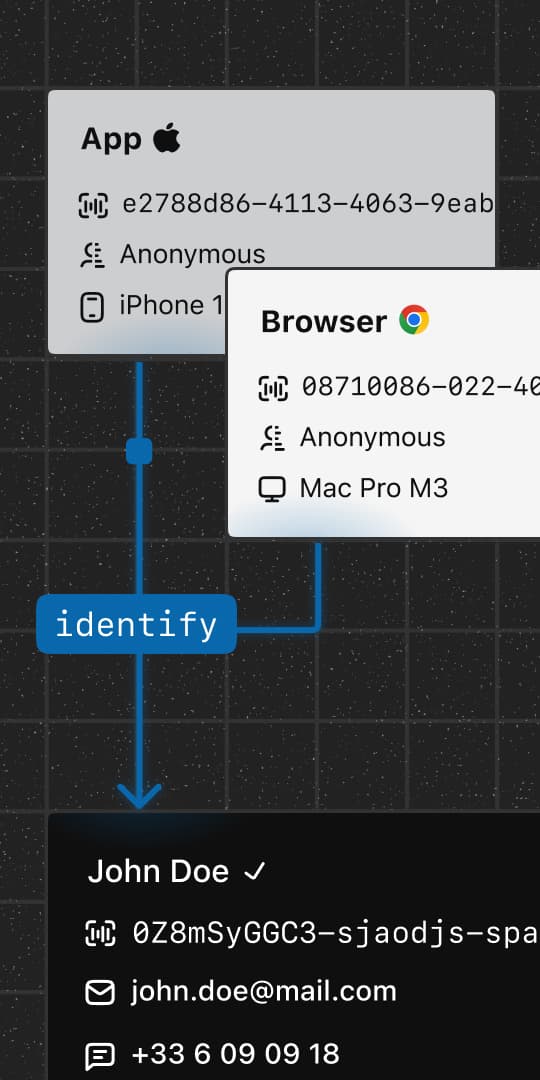
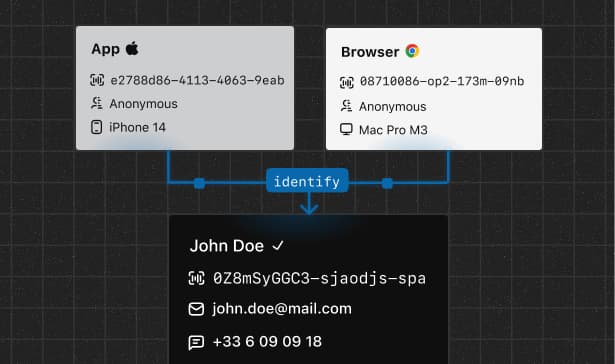
Apps, websites, stores and backends feed the same customer profile: identifiers, attributes, subscriptions and behavioral history. Batch resolves identities deterministically, on your own customer ID, for exact, explainable merges.
One identity across every channel.
Batch ties every interaction to the right profile using your customer ID, deterministically: the same rule as in your systems, applied at every touchpoint.
Apps, websites, forms, in-store POS and other touchpoints feed the same profile as soon as an identity link is established.
Granular behavioral history.
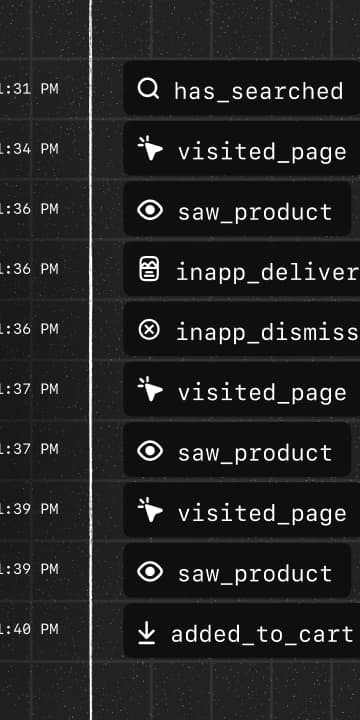
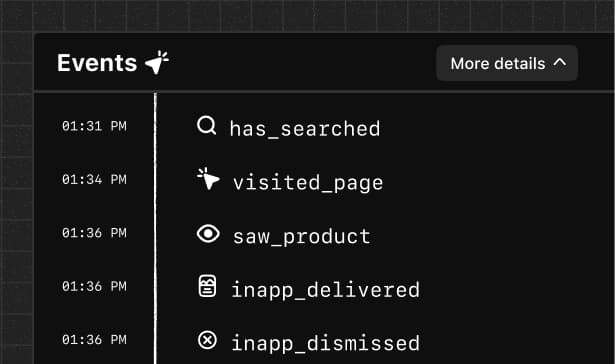
Batch keeps every interaction in its Events Store, with its timestamp and all its attributes. Data stays raw, available for both targeting and analysis. 36 months by default, configurable to fit your privacy requirements and use cases.
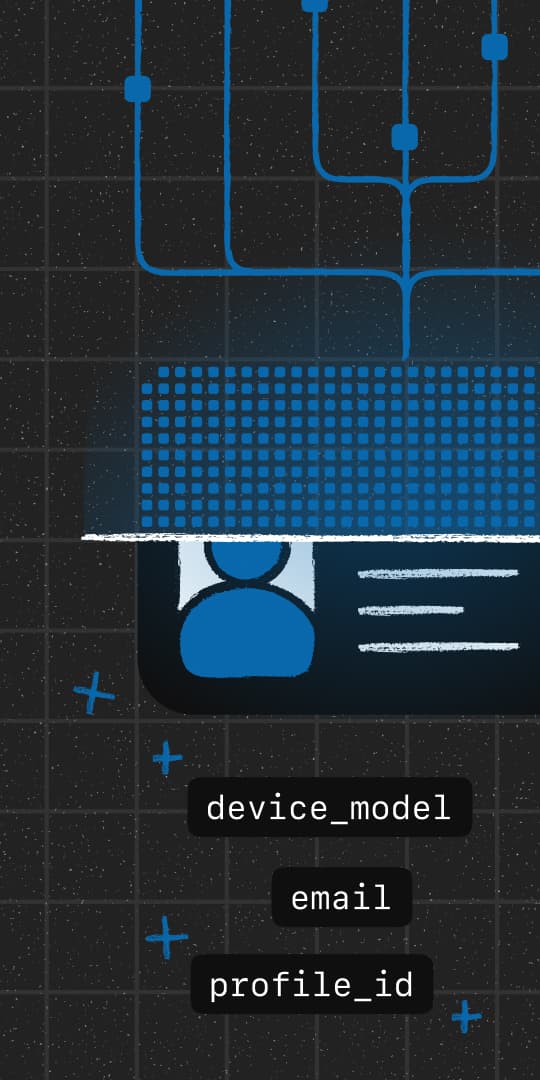
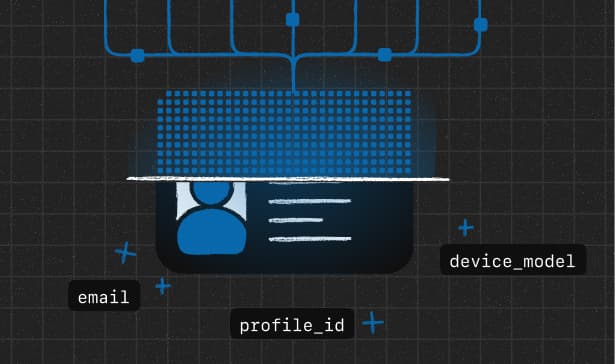
Anonymous and logged-in profiles.
Batch creates a profile from the very first visit, before any identification: it collects activity, receives attributes and can already be targeted. At login, identity resolution merges that history into the logged-in profile: screens viewed, products browsed and events are attached to the right customer, in a single profile.
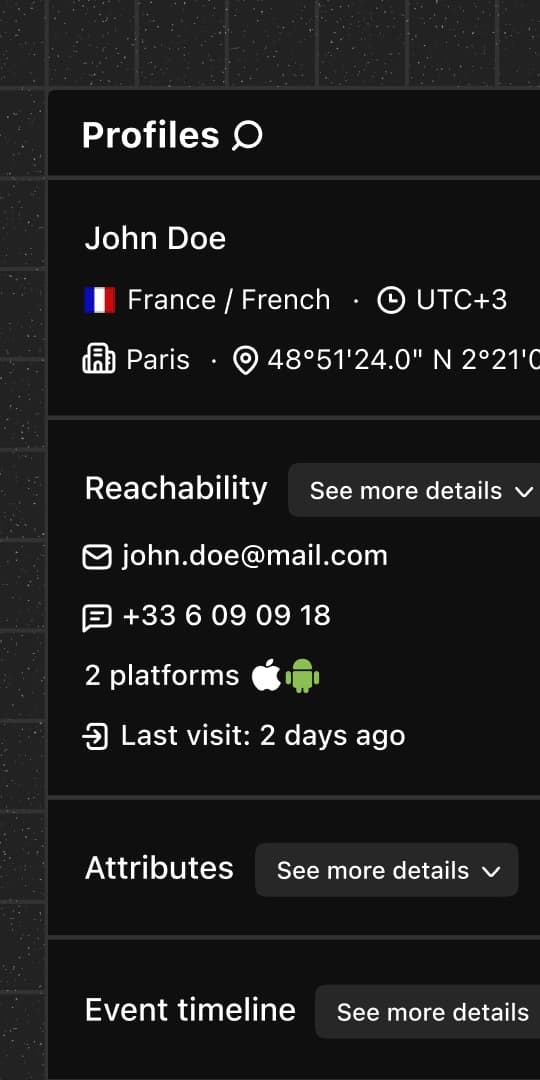
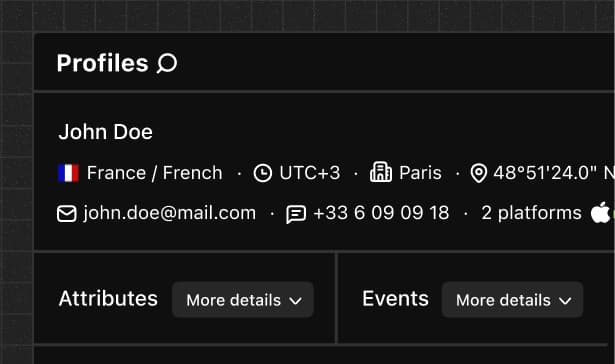
Inspect any profile.
Find the attributes, installations, subscriptions and events tied to a user, right in the Batch dashboard.
Profile View lets Data, Support and Product teams quickly see what Batch knows about a profile.
Features: Profile View · Attributes · Subscriptions · Event timeline
One identity across every channel.
Batch ties every interaction to the right profile using your customer ID, deterministically: the same rule as in your systems, applied at every touchpoint.
Apps, websites, forms, in-store POS and other touchpoints feed the same profile as soon as an identity link is established.
Anonymous and logged-in profiles.
Batch creates a profile from the very first visit, before any identification: it collects activity, receives attributes and can already be targeted. At login, identity resolution merges that history into the logged-in profile: screens viewed, products browsed and events are attached to the right customer, in a single profile.
Granular behavioral history.
Batch keeps every interaction in its Events Store, with its timestamp and all its attributes. Data stays raw, available for both targeting and analysis. 36 months by default, configurable to fit your privacy requirements and use cases.
Inspect any profile.
Find the attributes, installations, subscriptions and events tied to a user, right in the Batch dashboard.
Profile View lets Data, Support and Product teams quickly see what Batch knows about a profile.
Features: Profile View · Attributes · Subscriptions · Event timeline
Your business tables, structured in Catalogs.
Products, authors, destinations, stores or contracts: every business table in your systems finds its place in a Catalog, with strongly typed columns, just like profile attributes. Your profiles and events reference them by ID, as in your relational model.


A typed schema, column by column.
Every column has a declared type: string, integer, float, date, bool, URL or array. Strings accept up to 10,000 characters, enough for a full product description or an article summary.

Objects referenced by ID.
Your events and profiles carry a SKU, an article ID or a store ID; price, stock, title or image live in the Catalog. Batch resolves the reference at send time: update an item once in the Catalog, and every message using it is up to date.

Millions of items per Catalog.
Proven by Europe's largest marketplaces and their millions of seller listings. Update incrementally, item by item, or replace the entire Catalog in a single import: the new version switches over at once, so your campaigns always read a complete version.
Schema, monitoring and data governance.
Reliable data, from ingestion to deletion: every attribute is typed, named and tied to its source, your flows are monitored continuously, and consent, retention and erasure requests are managed directly from Batch.
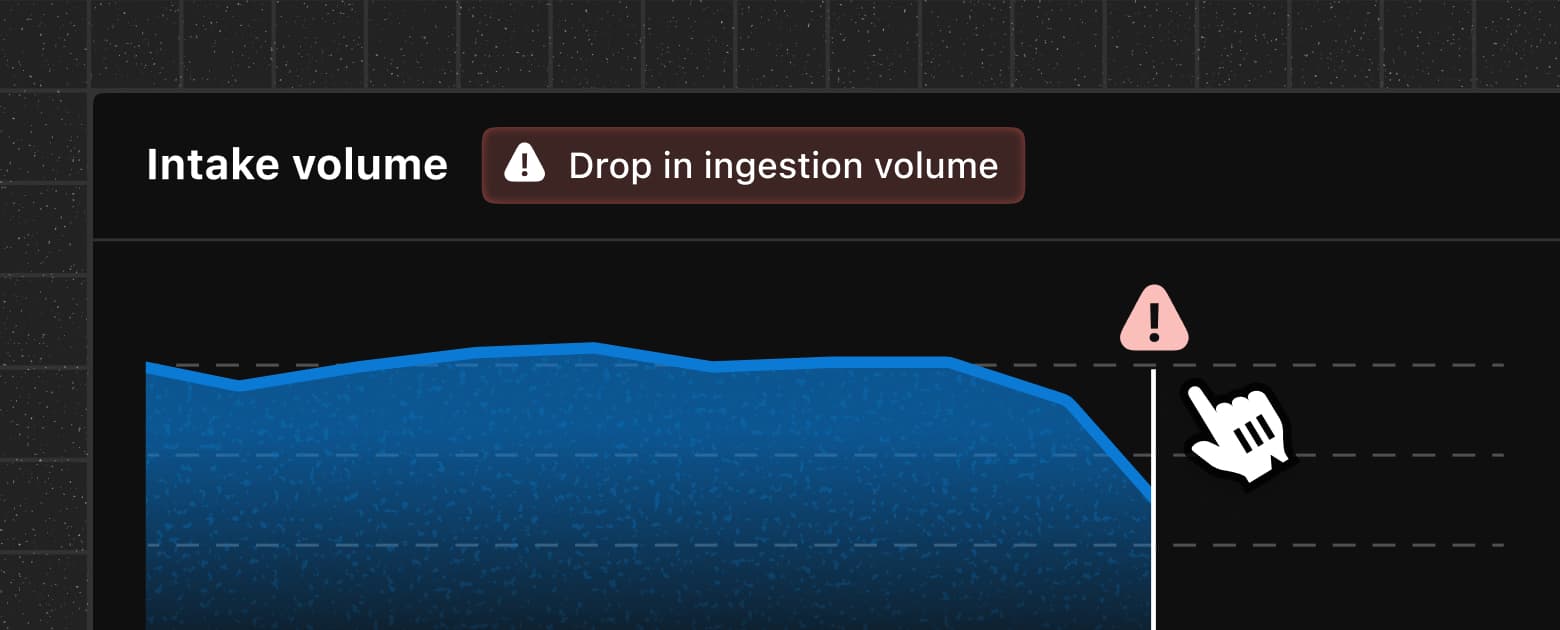
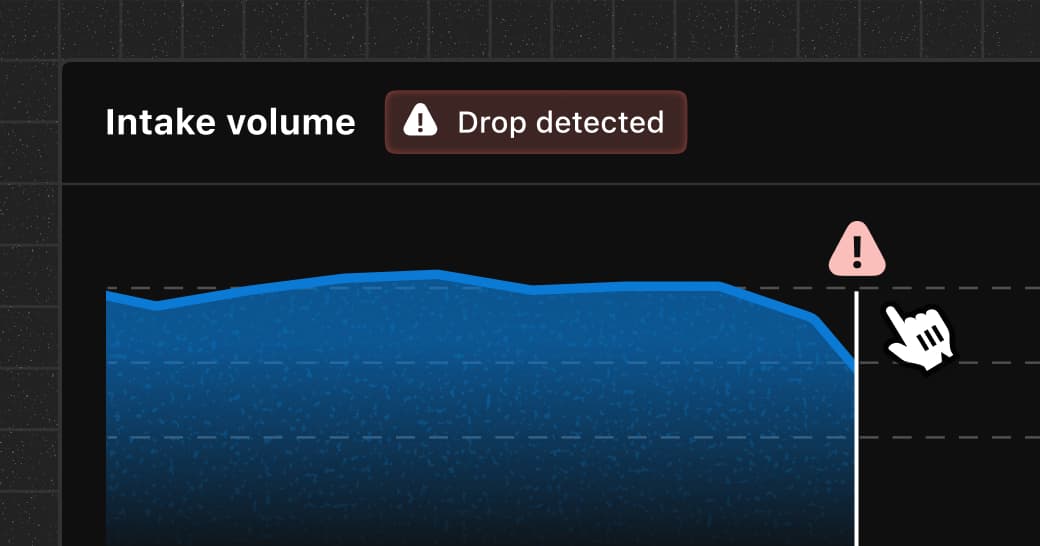
Monitoring and alerts on your data flows.
Batch continuously monitors your ingestion flows and attributes. Volume drops, fields going empty, sources going silent: anomalies are flagged in real time.
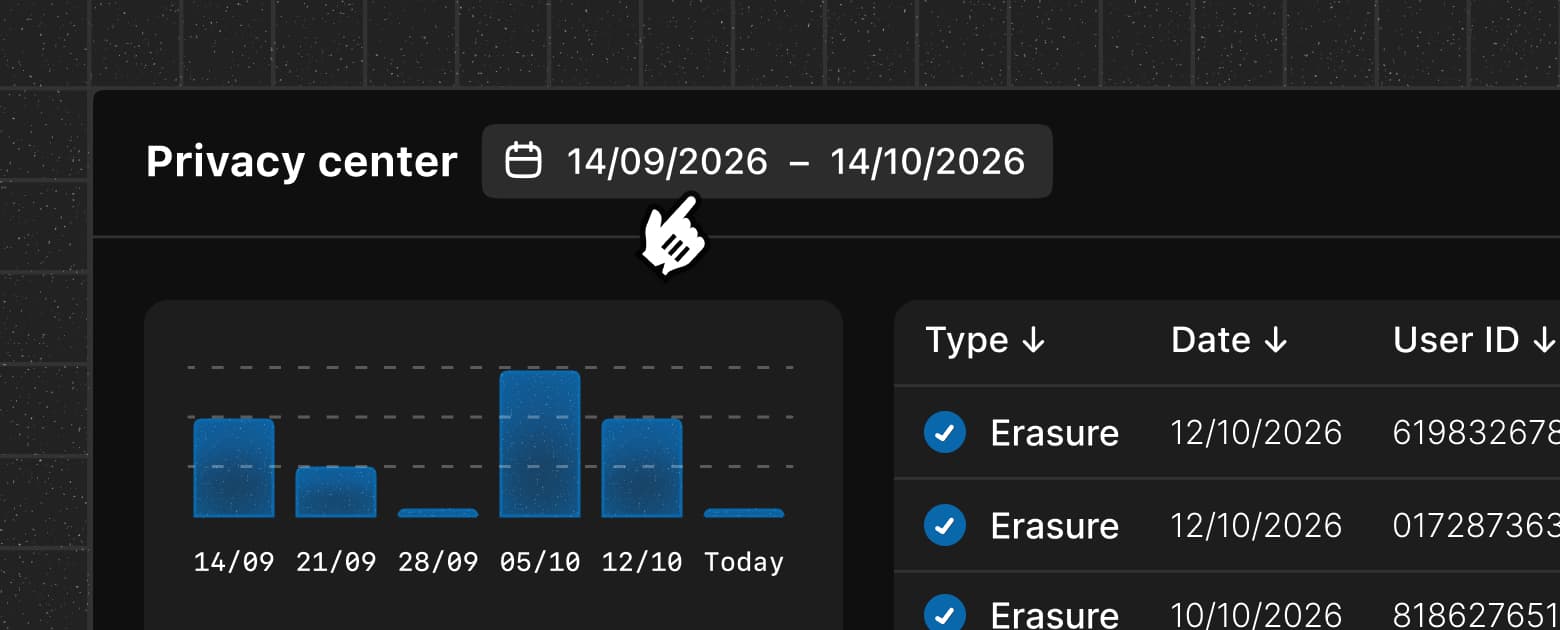
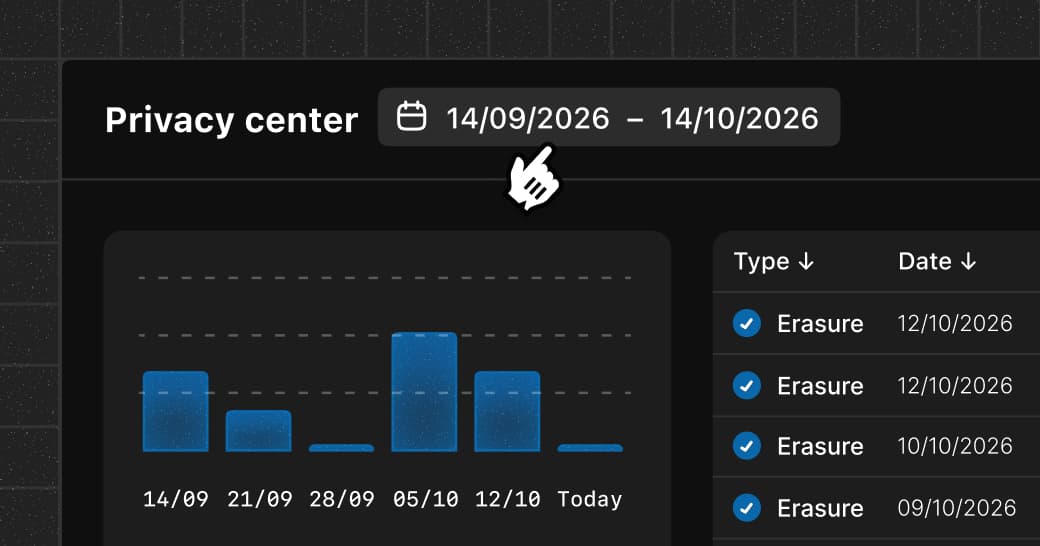
Govern data throughout its lifecycle.
Consent, preferences, retention rules and deletion are managed in Batch through a dedicated set of tools: Privacy Center, Inactive Profiles, GDPR API.
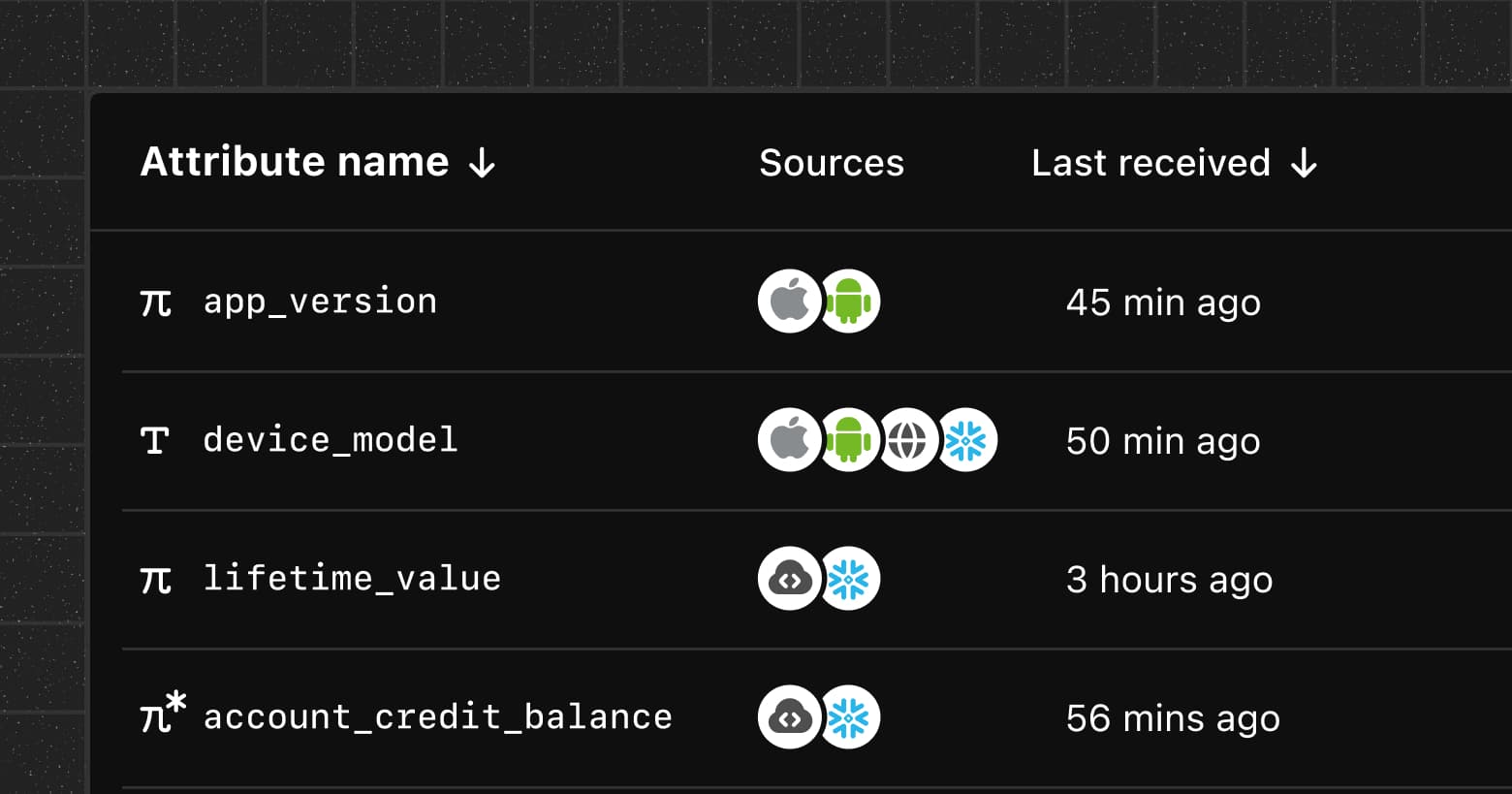
Stay in control of your data schema.
Types, names, sources, archiving: every attribute Batch collects is typed, named and tied to its source. The Data Catalog shows what actually exists in the platform: which attribute, fed by which flow, with which values.
You stay in control over time. Rename an attribute misnamed at implementation, spot two fields doing the same job, archive those from a retired app: it all happens in the dashboard, by your teams.
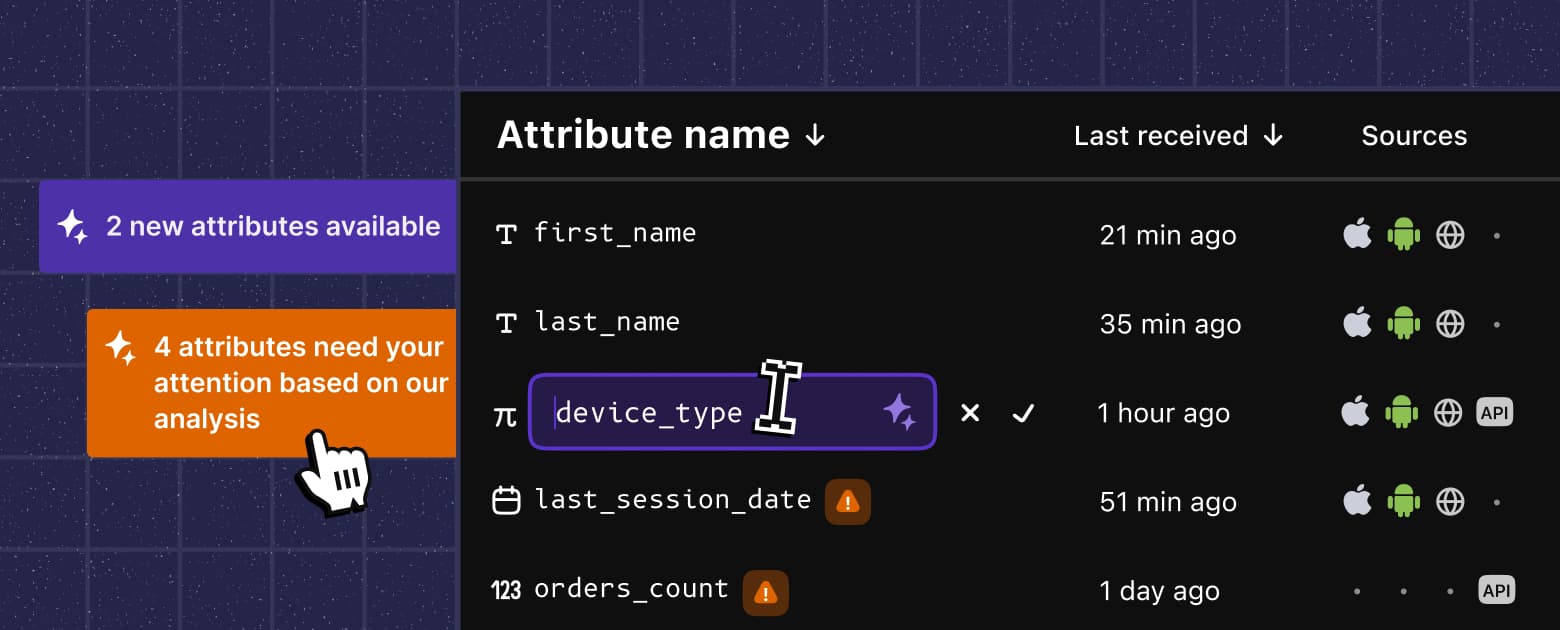
Batch AI Assist: an agent for your data.
Batch AI Assist agents analyze your schema and proactively flag inactive attributes, duplicates and broken flows. They also give every attribute a readable label: your marketing teams target "Last purchase date" without handling last_purchase_date.
Monitoring and alerts on your data flows.
Batch continuously monitors your ingestion flows and attributes. Volume drops, fields going empty, sources going silent: anomalies are flagged in real time.
Stay in control of your data schema.
Types, names, sources, archiving: every attribute Batch collects is typed, named and tied to its source. The Data Catalog shows what actually exists in the platform: which attribute, fed by which flow, with which values.
You stay in control over time. Rename an attribute misnamed at implementation, spot two fields doing the same job, archive those from a retired app: it all happens in the dashboard, by your teams.
Govern data throughout its lifecycle.
Consent, preferences, retention rules and deletion are managed in Batch through a dedicated set of tools: Privacy Center, Inactive Profiles, GDPR API.
Batch AI Assist: an agent for your data.
Batch AI Assist agents analyze your schema and proactively flag inactive attributes, duplicates and broken flows. They also give every attribute a readable label: your marketing teams target "Last purchase date" without handling last_purchase_date.
Enrichment: predictive scores, aggregates and device data.
Batch creates new attributes from the behavioral history of your Profiles, kept in the Events Store, from your engagement data and from data collected by the SDKs. They can be targeted and used for personalization like any profile attribute, and Batch computes and keeps them up to date for you.


Batch AI Predict: 15 predictive scores.
Machine learning and deep learning models, trained on the behavioral history of your own Profiles, compute churn, purchase propensity, customer value or promotion sensitivity. Each score is written as a profile attribute, visible in Profile View: AI-driven decisioning becomes a targeting criterion like any other.


Targetable aggregates, out of the box.
Batch computes aggregates on the behaviors stored in the Events Store, over a rolling window you define or across the full history: number of purchases, total amount, average basket, largest purchase. Enough to target by RFM or recent customer value, straight from the dashboard.

Automatic device-level data collection.
By default, Batch SDKs collect a minimal set of technical data. Integration settings let you enable additional device metadata useful for targeting, in line with your consent policy.
Features: Locale · Language · Country · City (IP-based) · Device brand and model · OS version · App version · Last visit · Last location
Batch Data Activate: segment, trigger and personalize in real time.

Segment on attributes, behaviors, predictive scores and campaign interactions, or import audiences computed elsewhere. Trigger a journey the moment an event arrives or an attribute changes. Then personalize every message with the data carried by the triggering event and by your Catalogs, resolved at send time.
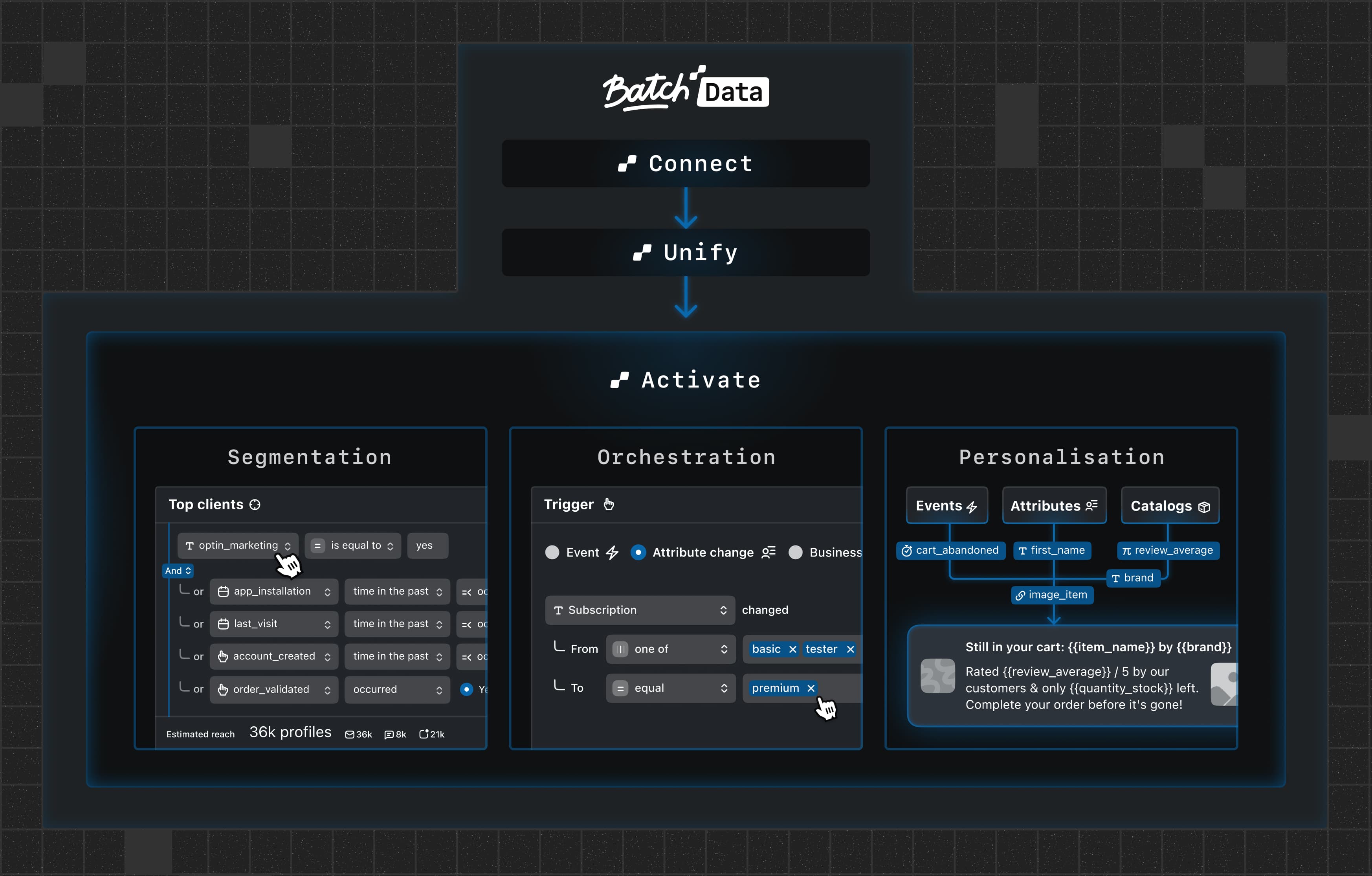
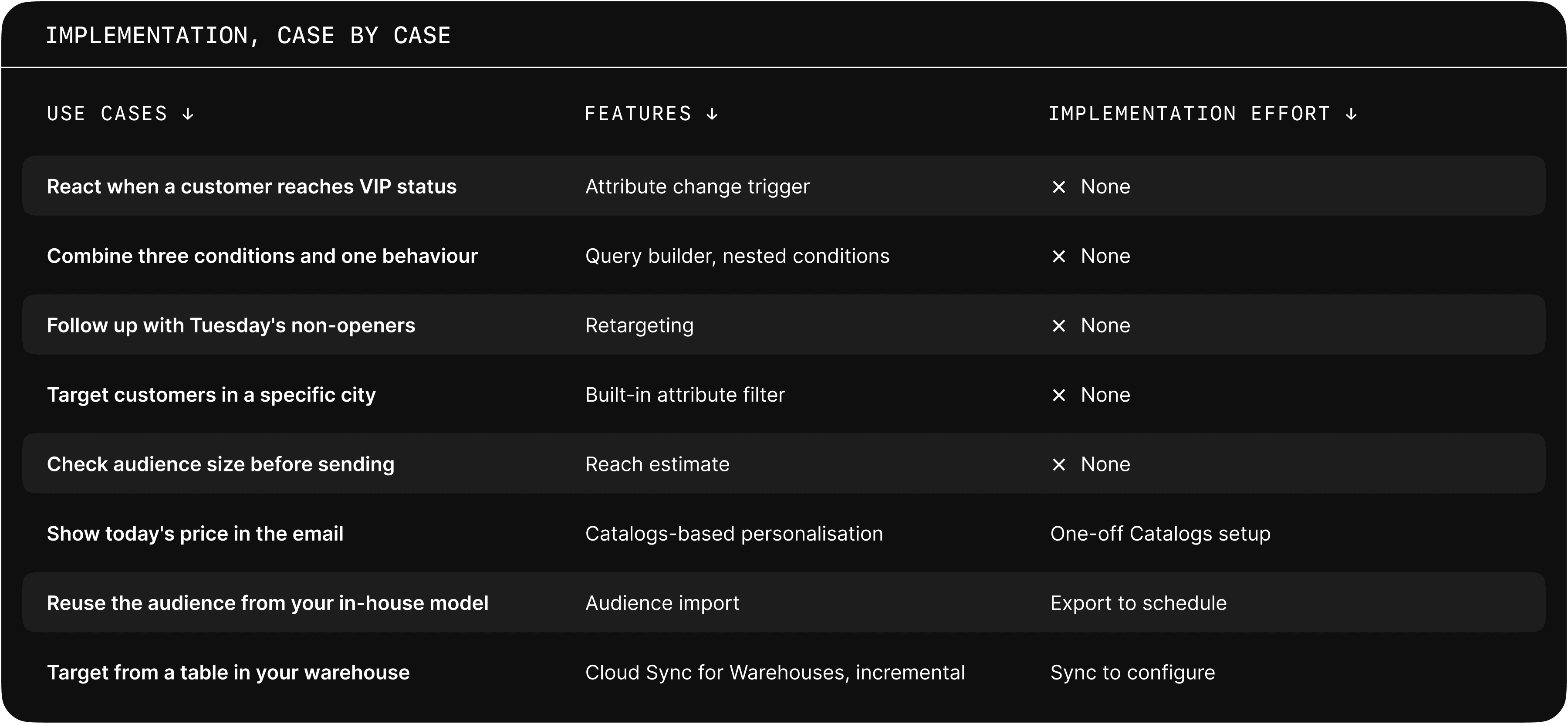
More marketing autonomy, fewer data tickets.

In many teams, every campaign idea still goes through a ticket: a SQL query, an export, an import, a new attribute to add to the model. With Activate, these tasks become self-serve for marketers. Your data, IT and CRM teams spend their time on architecture, data quality and new use cases.

Dynamic segments
Filters evaluated across your entire base at run time, nestable and reusable from one journey to the next.

Static audiences
Populations computed elsewhere, imported and combinable with every other criterion.

Segment builder
Targeting as precise as an advanced SQL query, without writing a single line.

Real-time reachable users
The number of reachable users updates with every change to your criteria, before you send.

Behavioral targeting
Query the Events Store directly, over a time window defined at targeting time.
Retargeting
Your campaign interactions become criteria: non-openers, clickers on a given link, profiles already contacted.

Real-time triggers
An event arrives or an attribute changes: the journey starts instantly, with built-in detection.

Real-time personalization
The triggering event carries its own data, such as the products in a cart, and a Jinja-like templating engine inserts it at send time, alongside your Catalogs, with a live preview in the dashboard.

Ads Sync
Your Batch segments pushed to Meta, Google Ads or TikTok: retargeting, excluding customers who have already converted, or lookalikes built from your predictive segments.
European hosting:
radical data privacy, from collection to AI.
Your data under EU jurisdiction.
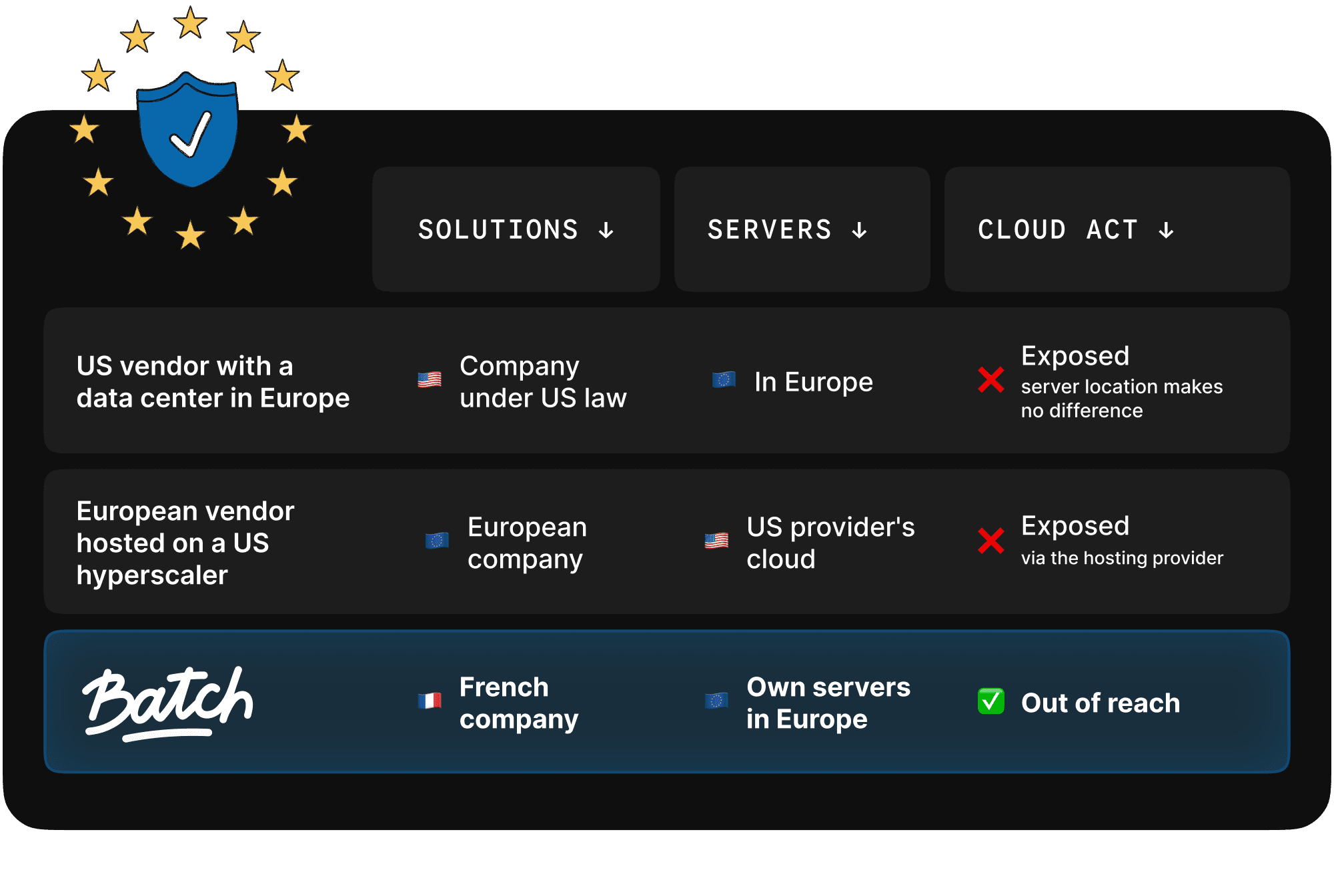
Your data is collected, stored and processed on bare-metal infrastructure managed by Batch, in European data centers: full EU data residency. Your contracting entity is a French company. Your data trains only your own models.
→ Guide: why choose a solution beyond the reach of the CLOUD Act?
With AI, data protection becomes decisive.
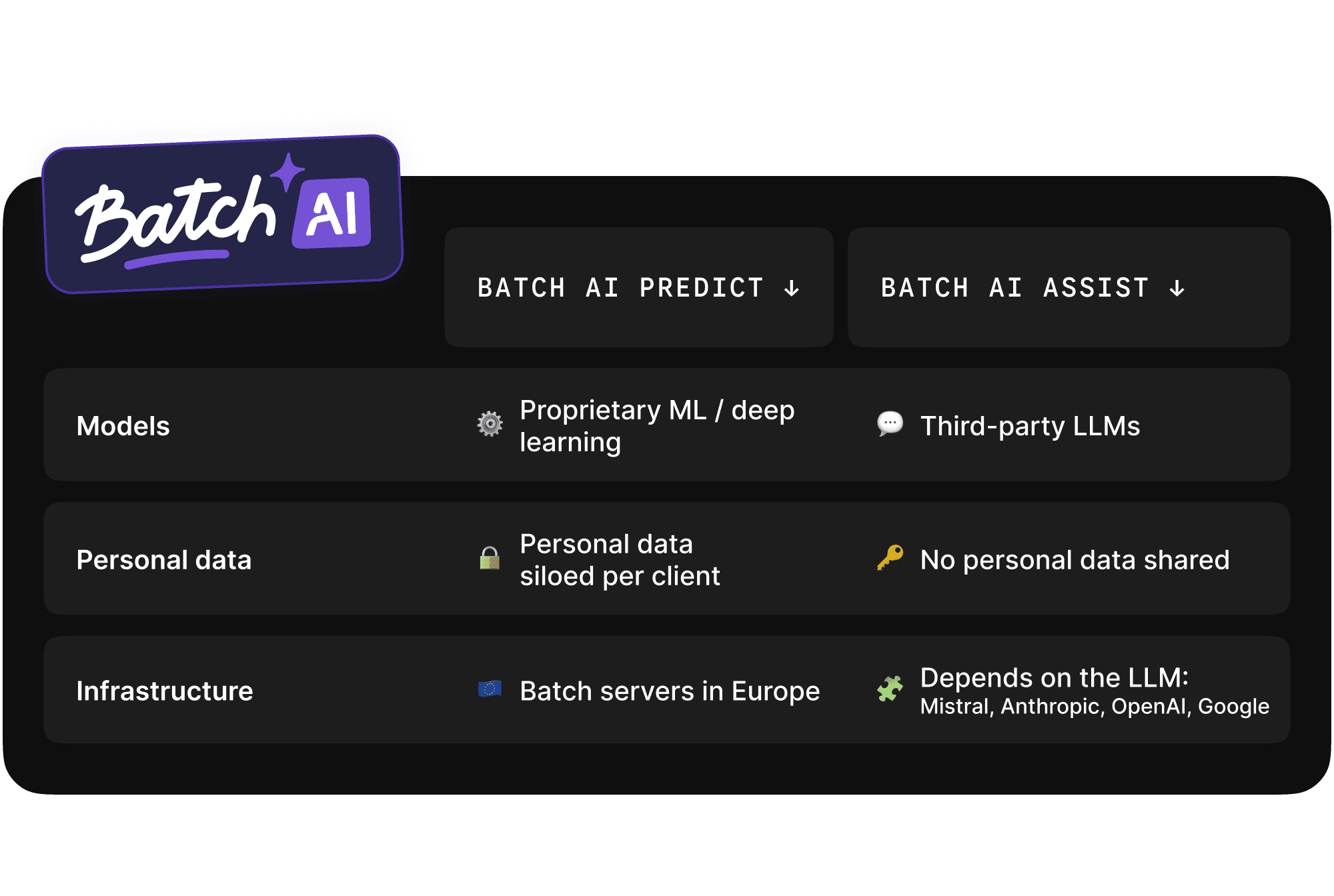
Batch AI Predict: proprietary machine learning and deep learning models, trained on your data, isolated per customer.
Batch AI Assist: third-party LLMs selected per use case (Mistral, Anthropic, OpenAI, Google…), with no personal data passing through.
Enterprise grade: security, compliance and data privacy.

Batch meets the requirements of enterprise IT, security and legal teams: access control, infrastructure protection, audits and GDPR compliance. Our practices follow ISO 27001 and SOC 2 principles, on infrastructure run by hosting providers that are themselves ISO 27001 and SOC 2 certified.

SSO

Granular permissions

Access logs
3FA bastion for admin access
DDoS mitigation
Intrusion detection (IDS/IPS)
White-box and black-box pentests
Bug bounty

Internal and external audits

GDPR compliance
Models isolated per customer
A platform built for scale.

Every day, Batch handles 100% of the traffic from the websites and apps of major European B2C brands such as Eurosport, beIN SPORTS and Lidl, and has for more than ten years. Black Friday, holiday peaks, breaking news alerts: the infrastructure is sized for the busiest day of the year.
- 20B
- events per day
- 1.2B
- monthly active profiles
- 99.9%
- uptime
- 100M
- emails per hour
- 540M
- push per hour
- 500K
- SMS per hour
A distributed architecture.
300 microservices across 4,000 to 6,000 instances, orchestrated by Kubernetes on more than 600 bare-metal servers, each application fully redundant. Inbound traffic goes through a cluster of reverse proxies; the internal network stays private, isolated from the internet.
Dedicated, multi-region bare metal.
Servers reserved for Batch, spread across multiple hosting providers, regions and 9 data centers, down to separate racks and aisles. A local failure stays local.
A stack built for volume and speed.
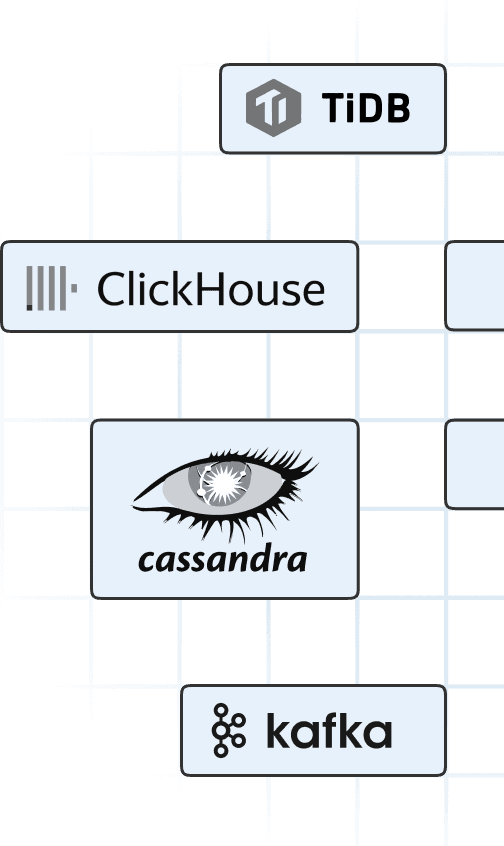
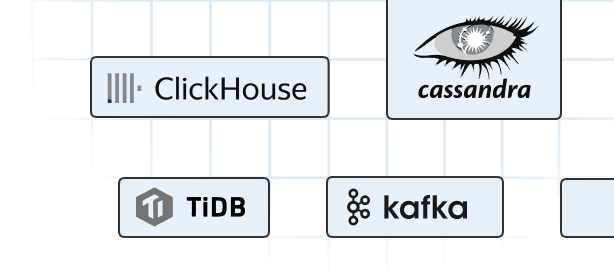
Kafka for queuing, TiDB and Cassandra for the profile database, ClickHouse for events and delivery statistics. On the integration side, highly available REST APIs respond in under 100 ms, for single calls and bulk alike.
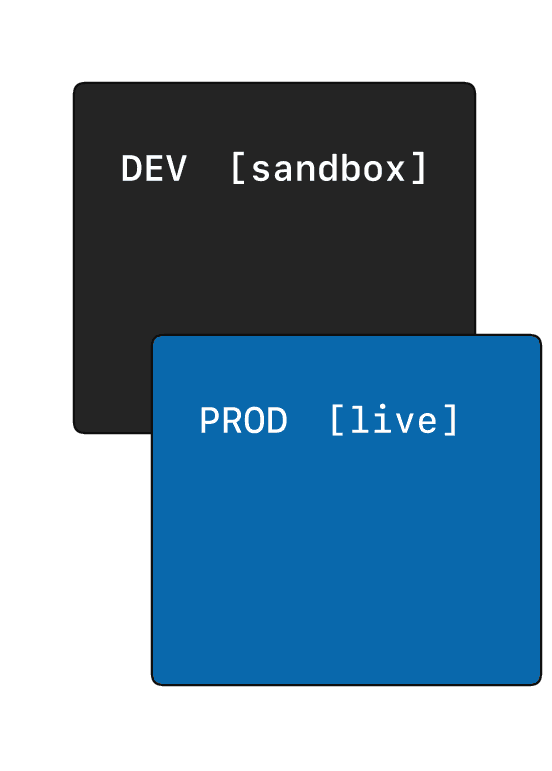
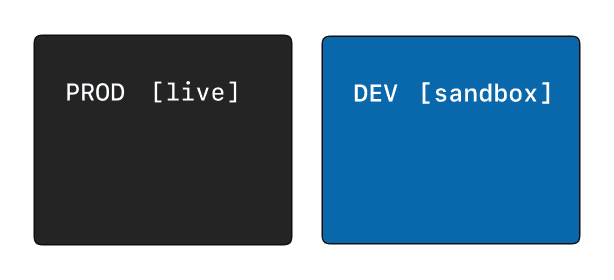
Separate environments.
Separate production and development environments, each with its own API keys and data. Your teams test integrations and campaigns safely before every release.
A distributed architecture.
300 microservices across 4,000 to 6,000 instances, orchestrated by Kubernetes on more than 600 bare-metal servers, each application fully redundant. Inbound traffic goes through a cluster of reverse proxies; the internal network stays private, isolated from the internet.
A stack built for volume and speed.
Kafka for queuing, TiDB and Cassandra for the profile database, ClickHouse for events and delivery statistics. On the integration side, highly available REST APIs respond in under 100 ms, for single calls and bulk alike.
Dedicated, multi-region bare metal.
Servers reserved for Batch, spread across multiple hosting providers, regions and 9 data centers, down to separate racks and aisles. A local failure stays local.
Separate environments.
Separate production and development environments, each with its own API keys and data. Your teams test integrations and campaigns safely before every release.
Migrate your data to Batch.
Batch migrates your profiles, consent data and data model as they are, with a proven method and dedicated teams at every step.
200+ migrations, whatever the platform.
Salesforce Marketing Cloud, Adobe Campaign, Braze, Airship, Selligent, Emarsys: every step is planned. Audit of your setup, data model mapping, migration of profiles, opt-ins and push tokens, IP warming, go-live.
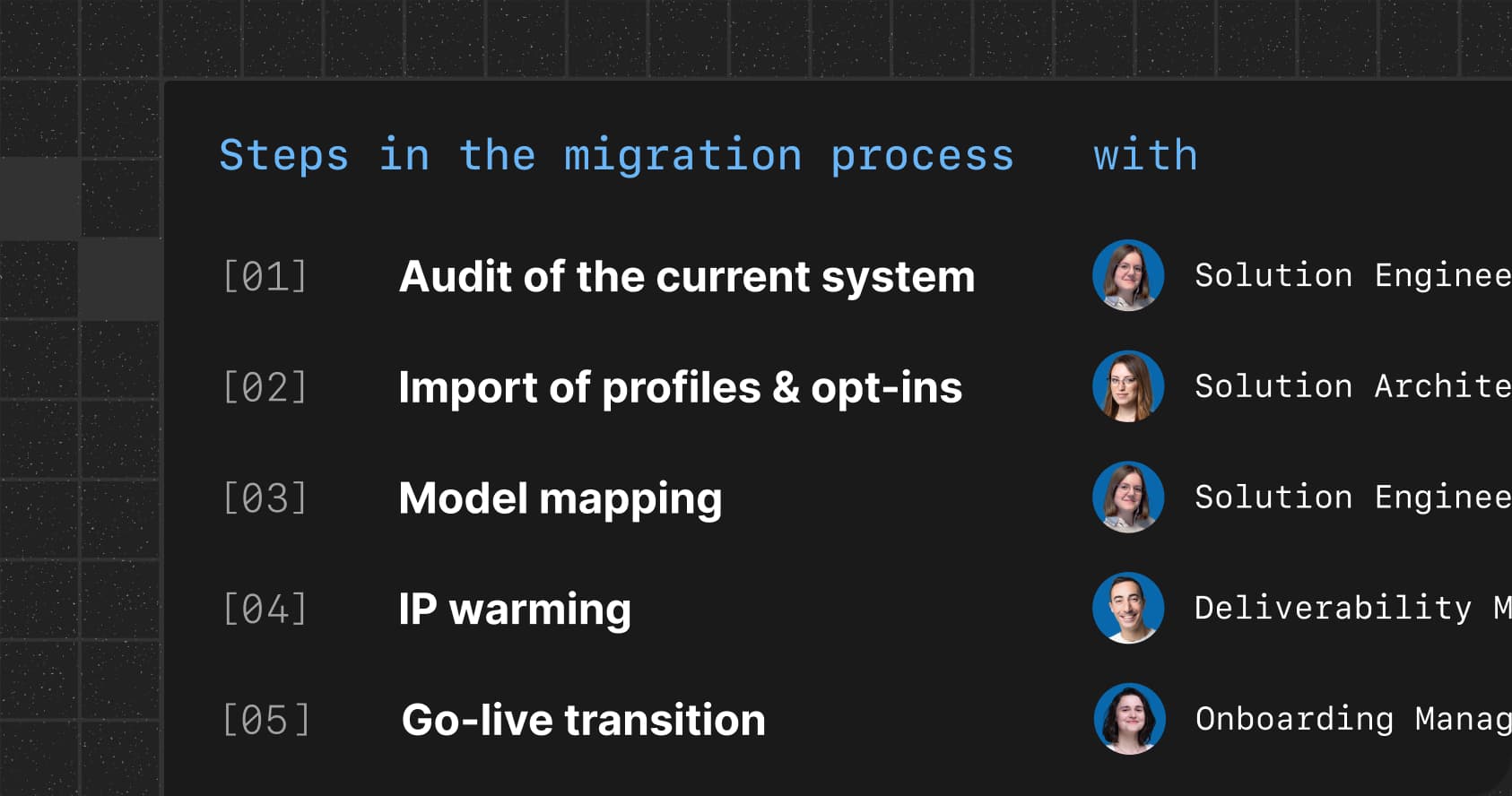
700M active profiles migrated.
Profiles, consent data, Catalogs and Audiences are migrated and mapped onto your data model in Batch. Your source systems stay in place until go-live.
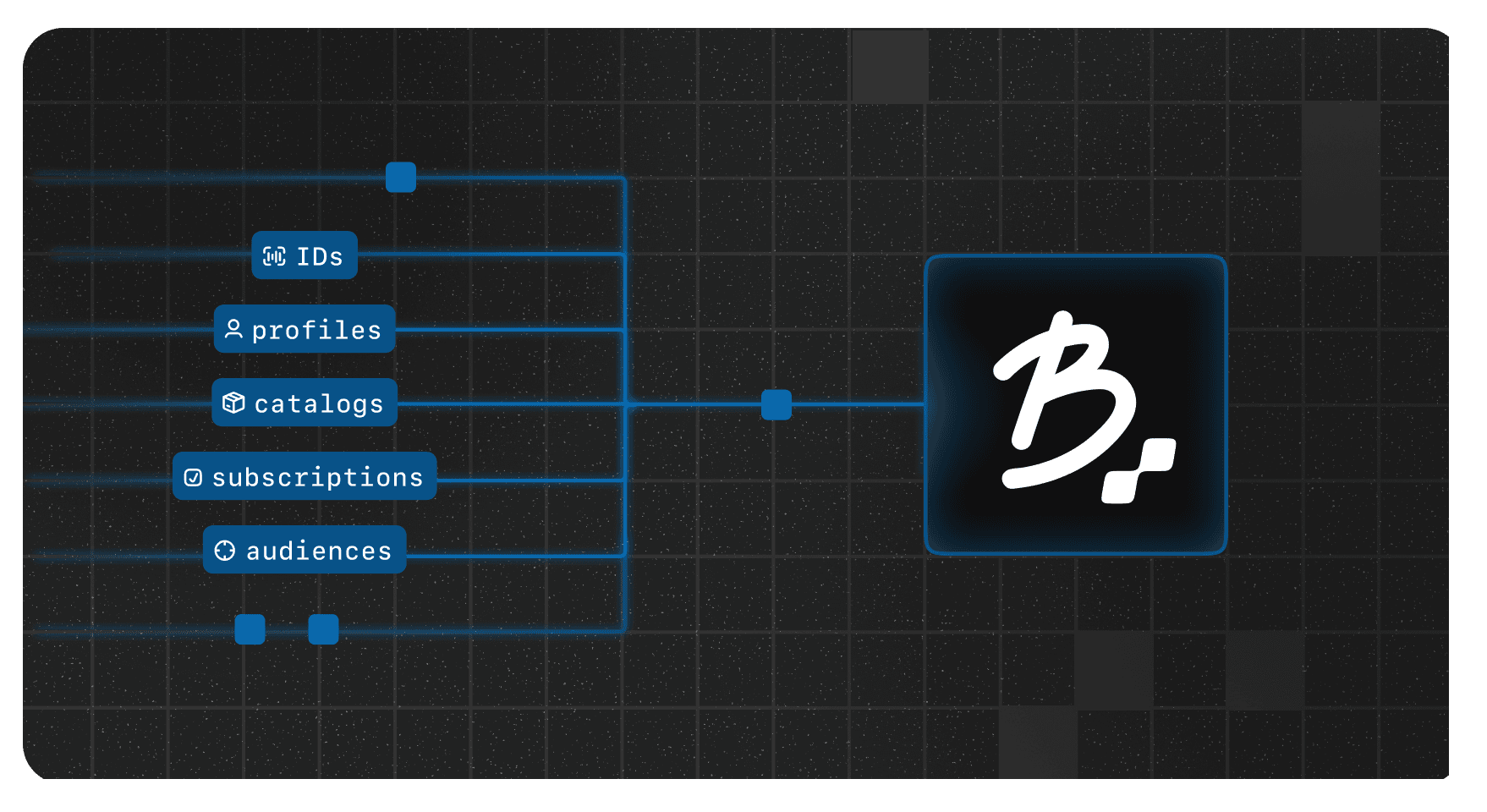
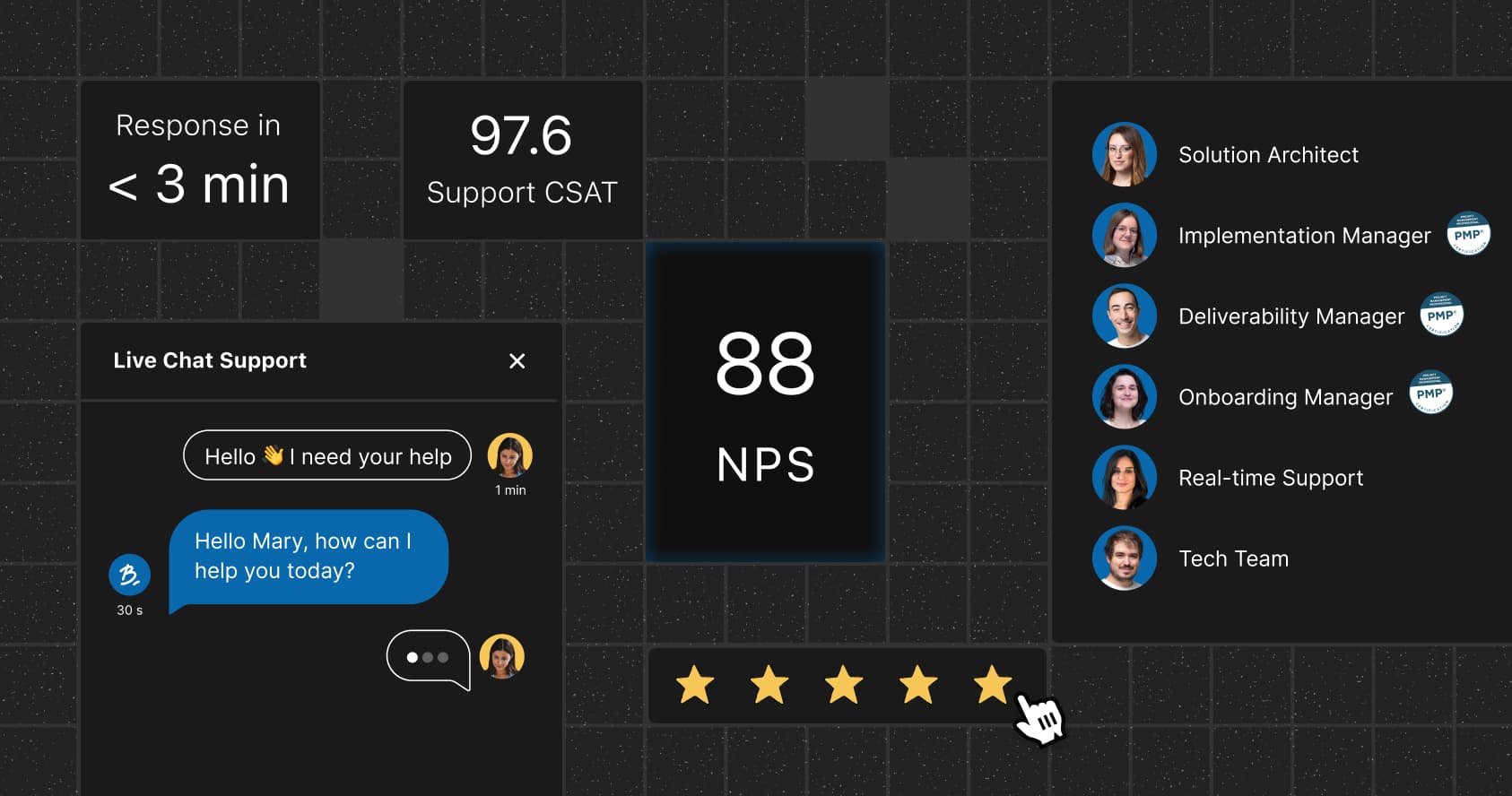
An 88 NPS on migrations.
- Direct escalation to technical teams
- 96% of tickets resolved in under an hour
- 3-minute median response time, in 5 languages
- 97.6 CSAT on support
Your integrator already knows Batch.
If you work with an agency, it joins the project with dashboard access, a shared channel and a Batch Implementation Manager overseeing the work.
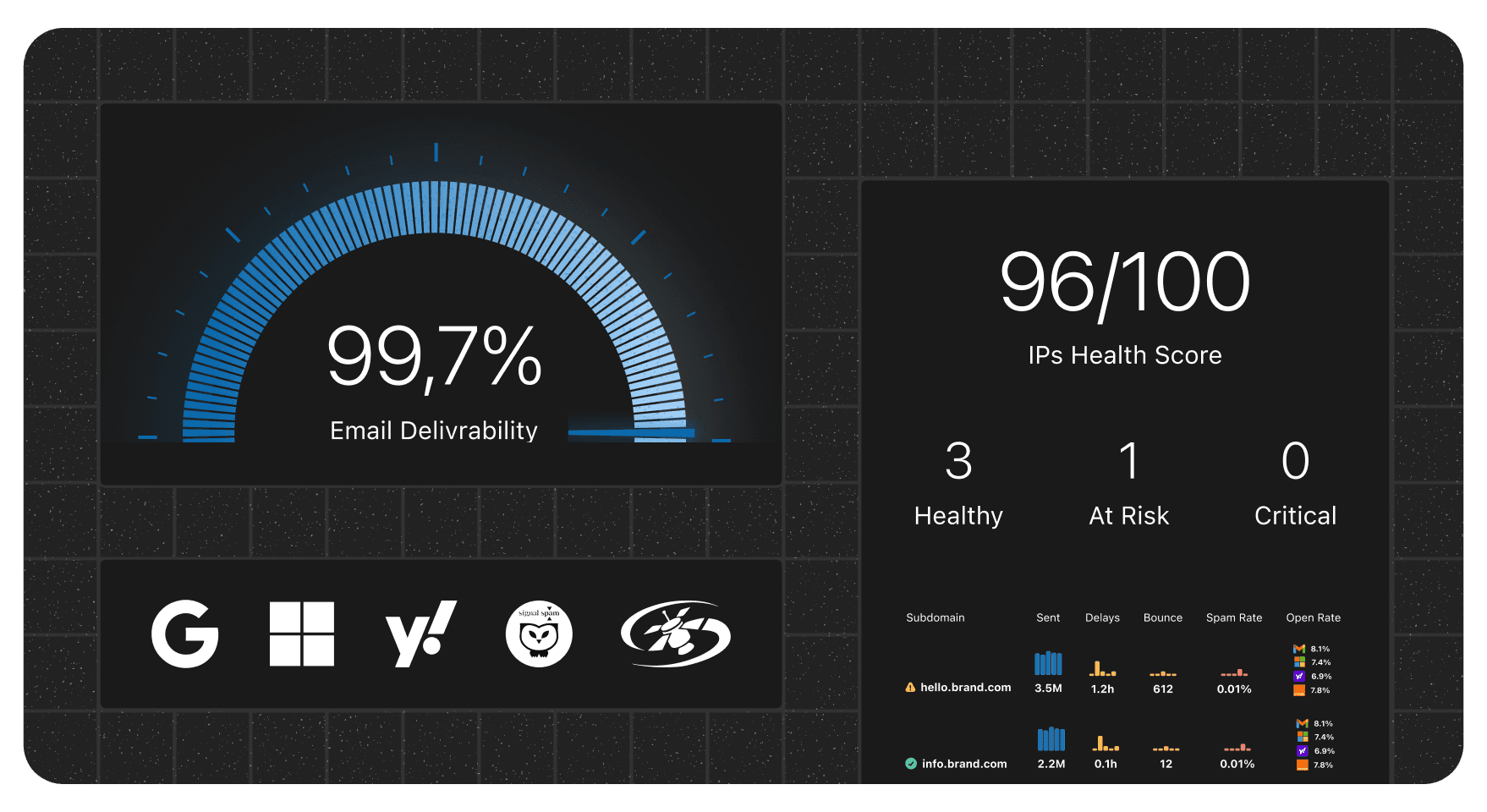
99.7% email deliverability, from day one.
Automated IP warming during the migration, daily reputation monitoring, direct relationships with Google, Microsoft, Yahoo, Signal Spam and Spamhaus.
Batch Data FAQ
Is Batch a CDP?
Batch Data is the customer data platform built into Batch. Like a CDP, it collects data from all your sources, resolves it into a 360° profile for every customer, the operational equivalent of a single customer view, and enriches it with aggregates and predictive scores. What sets it apart: it is built for activation, so data is usable in real time by segmentation, journeys and personalization, within the same platform. It builds on your single customer view and your data warehouse, which it draws on to activate data.
Do I need a CDP to use Batch?
No. Batch connects directly to your tech stack, from sources to destinations.
From your sources: SDKs and the Profile API for your apps and backends, plus Cloud Sync, our reverse ETL, for your data warehouses, SQL views and files.
To your destinations: the Export API, two-way Cloud Sync and Event Dispatchers distribute Profiles, Segments and engagement signals to your systems, for your analysis and models.
If you already use a CDP, Batch most likely already connects to it.
Does Batch replace my data warehouse?
No, Batch Data doesn't replace your data warehouse: it remains the system of record for your customer and business data, the source of truth that also serves BI, finance and your data science models. Batch Data sits on top of it as an activation layer, in a composable approach: Cloud Sync reads only what your campaigns need, incrementally, and writes back the engagement signals your sends produce. Your data warehouse stays complete, and your campaigns run in real time.
Does Batch support zero-copy?
Yes, Batch Data supports zero-copy (or no-copy) activation for some use cases. An Audience imported from your data warehouse carries only identifiers and the few personalization fields the campaign needs, without rewriting your profiles. A triggering event carries its own message data, such as the products in a cart, inserted at send time.
Behavioral targeting and real-time journeys, on the other hand, rely on an operational store: querying a data warehouse for every event runs into the latency and cost of analytical databases. Batch combines both approaches, depending on the use case.
Can Batch handle our volumes?
Yes, Batch is built for scale. Every day, the platform handles 100% of the traffic from the websites and apps of major European B2C brands such as Eurosport, beIN SPORTS and Lidl: 20 billion events per day, 1.2 billion monthly active profiles, up to 540 million push notifications per hour.
Proven over more than ten years, it is sized for the busiest day of the year: Black Friday, holiday peaks, a breaking news alert sent to an entire audience. Its distributed architecture on dedicated bare metal scales horizontally, and every large-scale project is sized with our technical teams before go-live.

Let's discuss.
Schedule a demo with one of our CRM experts.
Contact



Mention LégalesCopyright Batch © 2026